
Duratec Roofing Solutions
PVC Roofing Systems: Everything Property Managers Need to Know
- $Home
- $PVC Roofing Systems: Everything Property Managers Need to Know
For property managers, the right roofing system can mean the difference between predictable long-term performance and years of leaks, repairs, and rising operating costs. That is especially true in areas where heat, heavy rain, rooftop equipment, and drainage issues put constant stress on flat and low-slope roofs.
PVC roofing has become a popular option for commercial buildings because it promises durability, energy savings, and low maintenance, but it is not the right fit for every property.
Before you commit to a six-figure roofing decision, it helps to understand how PVC works, where it performs best, what it costs, and how it compares to other common systems.
Key Takeaways
- A properly installed PVC roof lasts 20 to 30 years.
- PVC reduces your building’s cooling costs and often qualifies for ENERGY STAR and LEED recognition.
- PVC is the preferred roofing material for buildings exposed to chemicals, grease, oils, or fire risk.
- Upfront costs run $7 to 12 per square foot installed.
What Is a PVC Roofing System?
How It’s Made and Installed
A PVC roofing system is a flat or low-slope roof made from flexible sheets of polyvinyl chloride, or PVC. These sheets are manufactured by combining PVC resin with plasticizers and reinforcing fibers, usually polyester or fiberglass, to make them strong, durable, and able to bend without breaking.
During installation, the sheets are rolled out over the roof deck and joined together with hot-air welding. This process creates tightly sealed seams that are often stronger than the membrane itself.
That is the main benefit of PVC roofing: the welded seams form a long-lasting waterproof barrier that is far less likely to peel, crack, or pull apart over time than older glued seam systems.
There are three primary installation methods your commercial roofing contractor will discuss with you:
- Mechanically fastened: The membrane is secured to the roof deck with fasteners and plates. It is usually the fastest and most cost-effective option, which makes it a practical choice for large, simple rooftops.
- Fully adhered: In a fully adhered PVC roof, the membrane is bonded directly to the surface below using adhesive. This approach works well for more complex roofs, especially those with a lot of equipment, corners, or penetrations.
- Ballasted: In a ballasted system, the membrane is laid in place and then held down with stone or pavers. This method is less common because the building must be able to support the extra weight.
What Types of Roofs Does It Work Best On
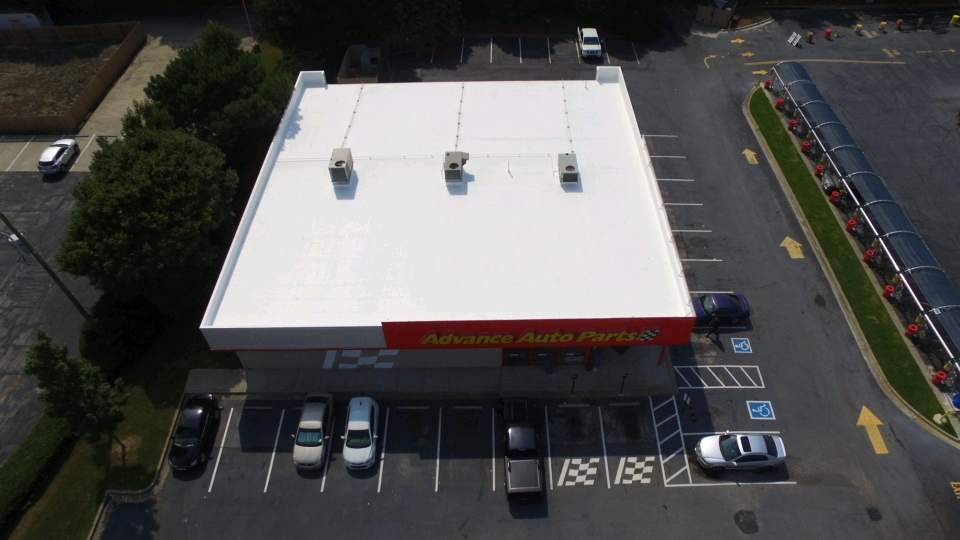
PVC membrane roofing is designed for flat and low-slope roofs, which are standard in commercial construction. It performs especially well on roofs with rooftop HVAC units, skylights, or multiple penetrations because the welding process creates watertight seals around complex shapes.
Standard PVC is particularly well-suited for buildings that generate heat, grease, or chemical exposure at the roofline. Restaurants, manufacturing plants, industrial facilities, and laboratories all benefit from PVC’s built-in resistance to those conditions.
If your building handles any of these materials, that single factor may make PVC the clear choice over other roofing products.
The Advantages of PVC Roofing for Commercial Buildings
Long Lifespan and Durable Construction
A properly installed PVC roof lasts 20 to 30 years and often exceeds its warranted lifespan when properly maintained. The membrane surpasses ASTM D4434 minimum breaking strength requirements, meaning it’s engineered to handle more than standard commercial stress loads.
That’s because a PVC roof resists punctures, high winds, heavy rain, and hail at a level most single-ply options can’t match. On a commercial property where roof replacement is a six-figure capital expense, that kind of durability directly affects your long-term ownership costs.
Energy Efficiency That Shows Up on Your Utility Bills
PVC’s white, reflective surface lowers HVAC loads during the months when cooling costs are highest. Many PVC roofing membrane systems qualify for ENERGY STAR ratings and contribute to LEED certification credits.
Reducing your building’s cooling demand also extends the operating life of your HVAC equipment, a secondary cost benefit that compounds over the roof’s lifespan.
Chemical and Fire Resistance
One of the clearest benefits of PVC roofing is its built-in chemical resistance. PVC is inherently resistant to oils, grease, acids, and industrial chemicals. Chemical resistance makes it the standard choice for restaurants, manufacturing plants, and labs where chemical exposure reaches the roofline.
PVC is also notable for its fire resistance. It’s self-extinguishing, meaning the material is designed to stop burning once the flame source is removed. These roofs satisfy strict commercial fire code requirements in many jurisdictions, which is especially important for buildings with higher fire compliance demands.
Low Maintenance Requirements
Compared to other flat roof systems, PVC roofing’s maintenance demands are minimal. Routine professional inspections and occasional cleaning are generally all that’s required to keep the system performing. They don’t need frequent recoating or resealing cycles.
If damage does occur, repairs are made using the same hot-air weld process used during installation, so patches bond seamlessly to the existing membrane. PVC’s smooth surface also helps prevent debris accumulation, reducing the risk of clogged drains and standing water.
Knowing the early warning signs of roof damage can help you address issues before they turn into costly repairs.
The Drawbacks You Should Know Before You Decide
Higher Upfront Cost
PVC typically runs $7 to 12 per square foot installed. While PVC generally trends higher than basic TPO on simple projects, all three single-ply systems now overlap significantly in real-world pricing based on roof size, complexity, and location. The initial capital requirement is real and needs to fit your budget.
Before ruling it out on price, calculate the total cost of ownership across the roof’s expected lifespan. A cheaper TPO roof may save money now. But it needs to be replaced sooner, so it ends up costing more over time than a PVC roof installed once.
Ask your commercial roofing contractor to run that comparison for your building.
Shrinkage Over Time
Like all thermoplastic materials, PVC slightly shrinks as it ages. If the roof wasn’t installed correctly or if inspections are skipped, that shrinkage puts stress on seams and flashings at edges and penetrations, which can become a leak pathway if left unaddressed.
Regular inspections from a qualified roofing professional catch early-stage shrinkage before it causes damage, keeping it a maintenance item rather than a repair event.
Performance in Extreme Cold
PVC becomes less flexible at very low temperatures, making it more susceptible to cracking under impact during the winter months. Cold-weather roof installation also requires contractors with specific experience in low-temperature welding techniques.
If your building is in a northern region with harsh winters, discuss your local conditions with your roofing contractor before committing. In many northern markets, experienced commercial roofing contractors install PVC successfully year-round using the right equipment and protocols.
How PVC Compares to Other Common Commercial Roofing Options
If you’re weighing PVC against other single-ply membrane roofing options, the table below gives you a direct side-by-side comparison of the three most common systems.
| Feature | PVC | TPO | EPDM |
|---|---|---|---|
| Typical Lifespan | 20-30 years | 15-25 years | 25-30 years (up to 40) |
| Installed Cost (per sq. ft.) | $7-12 | $5.50-9.50 | $4-13 |
| Chemical Resistance | Excellent | Moderate | Low |
| Fire Resistance | Self-extinguishing | Moderate | Low |
| Energy Efficiency | High (reflective) | High (reflective) | Low (dark surface) |
| Seam Method | Heat-welded | Heat-welded | Adhesive/tape |
| Best For | Chemical exposure, hot climates | Budget-conscious, general commercial | Cold climates, simple flat roofs |
Which roofing system fits your building? Schedule an inspection with Duratec Roofing Solutions to get a professional assessment tailored to your roof, climate, and budget.
When PVC Is the Right Call
- If your building has chemical or grease exposure at the roofline, PVC’s chemical resistance is unmatched among roofing membrane options.
- If your building is in a hot climate where cooling costs are a major operational expense, PVC’s reflective surface delivers real, measurable savings.
- If you plan to own the commercial property for 20 or more years, the upfront premium justifies itself through a longer lifespan and lower maintenance costs.
- If your facility has strict fire code requirements, PVC’s self-extinguishing properties give it a clear edge over most alternatives.
When Other Options Might Make More Sense
- If your budget is tight, a TPO roof delivers solid single-ply roofing performance at a lower installation price.
- If your building is in a very cold climate and experienced PVC installers aren’t readily available in your market, EPDM may be a more practical choice.
- If your roof sees heavy foot traffic, discuss impact resistance options with your roofing professional before defaulting to any single-ply system.
What to Expect From Installation and Maintenance
Installation Timeline and What Affects It
Installation speed depends on roof size, complexity, and the installation method your roof contractor uses. Mechanically fastened systems are the fastest to install, while fully adhered systems take longer. However, fully adhered systems handle complex roofs with heavy rooftop equipment, multiple HVAC penetrations, or irregular shapes better.
Maintenance Best Practices
Schedule professional roof inspections at least once a year, twice if your budget allows, with spring and fall being the most productive times. At each inspection, your roofing professional should check for:
- Shrinkage stress at seams and flashings along the roof edge and around penetrations
- Debris accumulation around drains would restrict water flow
- Ponding water in low spots, a significant PVC vulnerability when drainage is inadequate, should be addressed promptly to prevent accelerated membrane wear.
Clean debris off the surface twice yearly and address any standing water quickly. Even a durable membrane degrades faster when water sits on it for extended periods.
For more guidance on handling ponding water, membrane damage, flashing failures, and other repair needs, see our guide to common flat roof problems and solutions.
Frequently Asked Questions
How long does a PVC roof last on a commercial building?
With proper installation and routine maintenance, PVC roofs typically last 20 to 30 years. Factors like climate, roof slope, drainage quality, and contractor experience all affect the actual service life.
Is PVC roofing worth the higher upfront cost?
For most commercial property owners and managers who plan to stay in the property long-term, the answer is yes. The combination of a longer lifespan, lower maintenance requirements, and reduced energy costs typically offsets the higher installation price over the roof’s life.
Can a PVC roof handle ponding water?
PVC is more resistant to ponding water than many alternatives, but standing water still accelerates membrane wear over time. If your roof has existing drainage issues, address them as part of the roof installation.
How does PVC compare to TPO for a commercial building?
Both are solid single-ply roofing options with heat-welded seams and good reflectivity. A TPO roof typically costs less upfront. PVC outperforms on chemical resistance, fire resistance, and long-term durability, making it the stronger choice if your building handles chemicals or grease.
What maintenance does a PVC roof actually need?
PVC roofing is genuinely low-maintenance compared to other flat roof systems, but low-maintenance does not mean maintenance-free: You should ensure:
- annual professional inspections
- semi-annual debris clearing
- prompt attention to any ponding water or seam stress.
Is a PVC Roof the Right Choice for Your Commercial Building?
Choosing a roofing system for a commercial building is about finding the one that makes the most sense for your building, your budget, and how long you plan to keep the property.
If your main concern is upfront cost, PVC may feel like a bigger investment at first, but a lower price does not always mean lower cost over time. And if you are unsure whether PVC is worth it for your property, that usually comes down to how your building is used, what kind of exposure the roof faces, and how much risk you want to take on later.
The best next step is to have your roof evaluated by a qualified commercial roofing contractor who can compare your options based on real site conditions.
Call us now
706-819-2584