
Duratec Roofing Solutions
A Property Manager’s Guide to Commercial Roof Leak Detection and Repair
- $Home
- $A Property Manager’s Guide to Commercial Roof Leak Detection and Repair
Finding the leak source quickly is important because hidden moisture can spread beyond the visible damage and increase repair costs. This guide explains how commercial roof leaks are detected, what warning signs to watch for, and how to decide whether your roof needs repair, restoration, or replacement.
Key Takeaways
- Water rarely enters directly above the stain you see inside, which is why it is not a good idea to guess the source.
- Professional roof leak detection tools, such as infrared surveys and electronic leak detection, find trapped moisture that a visual walk-through might miss entirely.
- Georgia’s storm frequency, humidity, and heavy pollen load create failure points at seams, roof drains, and penetrations faster than most property owners expect.
- Targeted leak repair, restoration coating, and commercial roof replacement solve different problems, and choosing the wrong one wastes money.
- Documented inspections at least twice a year protect both your manufacturer warranty and your ability to file successful insurance claims.
Why Georgia’s Weather Puts Constant Pressure on Commercial Roofs
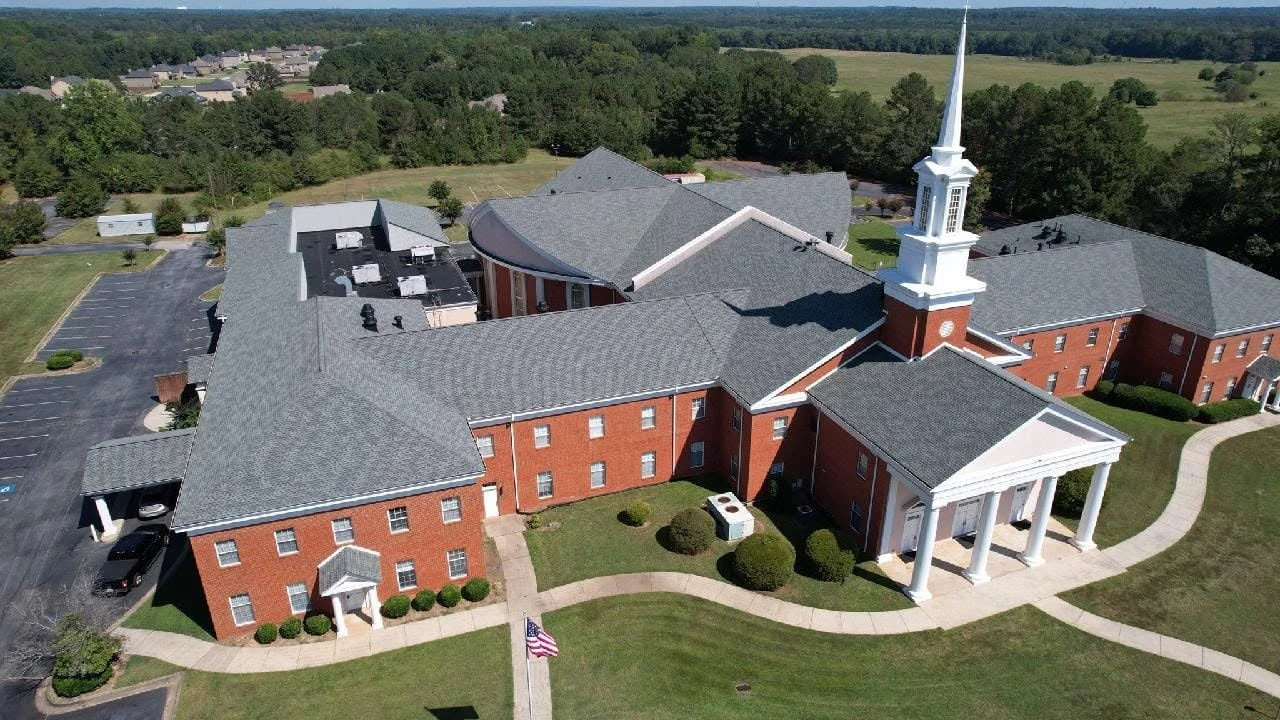
Georgia’s climate creates unique challenges for commercial roofs that commercial property managers in milder regions never face. Understanding these conditions can help you judge whether a commercial roofing contractor’s recommendation actually fits your building.
Higher Frequency of Storms
Commercial roofs often fail from repeated stress rather than one major storm. Each wind event can work on loose flashing, membrane edges, fasteners, and seals until a small weakness becomes a leak.
Since Georgia faces frequent thunderstorms, damaging winds, and hail each year, commercial roofs here need regular inspections and preventive maintenance to catch minor damage early and help the system reach its expected service life.
Heat and Humidity Damage Seams Year-Round
Daily temperature changes cause roofing materials to expand and contract, putting repeated stress on seams, laps, fasteners, and flashing.
There’s also Georgia’s high humidity that worsens moisture problems when water becomes trapped within the roofing system. Over time, that moisture can reduce insulation performance and damage the roof deck before leaks or interior staining become visible.
Pollen, Debris, and Drainage
Georgia’s heavy spring pollen, especially from pine trees, can mix with leaves and other debris and collect around gutters, scuppers, and internal roof drains. During periods of heavy rain, clogged drainage points can leave water ponding on a commercial roof.
That added moisture and weight can stress membranes, seams, and drainage components, making regular roof cleaning and inspections especially important.
The Warning Signs Worth Acting On
On flat and low-slope commercial roofs, certain signs often point to developing membrane, flashing, drainage, or moisture issues. Knowing what to look for can help you address damage before it spreads or leads to a more disruptive repair.
Signs that show up inside the building:
- Ceiling tile staining, bubbling paint, or rust forming on ceiling grid and fastener heads
- A musty smell concentrated in one zone even when no water is visible
- Tenant complaints about humidity, or HVAC struggling to keep up in a single area
Signs you can see during a superficial roof inspection:
- Ponding water, blistering, splits at seams, and open laps
- Loose or lifted flashing at parapets, curbs, skylights, and equipment penetrations
- Fresh punctures near HVAC units, often left behind by non-roofing trades who accessed the roof
Some roof problems are easy to miss because they do not show up every day. A leak may only appear during heavy rain, then seem to disappear. You may also notice one area of the building feels more humid or harder to cool. Those small changes can point to moisture getting into the roofing system, so they are worth checking before a minor issue turns into something more disruptive.
How Commercial Roofers Locate the Source of the Leak
Water enters through a breach, then travels sideways along the deck, through insulation joints, and down structural members before finally dropping. The entry point and the exit point can be a considerable distance apart, which is why merely patching the visible area so often fails.
That distance is the entire reason commercial roof leak detection is a specialized service.
| Method | What It Finds | Best Used When | Limitations |
|---|---|---|---|
| Visual inspection | Surface damage, open seams, clogged drainage, punctures | Routine inspections and post-storm walks | Misses moisture trapped below the membrane |
| Water testing | The specific entry point of an active leak | You have one localized, repeatable leak | Time-consuming across large roof areas |
| Infrared survey | Wet insulation across the full roof area | Assessing overall condition or planning a replacement scope | Requires specific weather and timing conditions |
| Electronic leak detection | Exact breach locations in the membrane | Verifying new installations or tracing hard-to-find leaks | Requires a conductive deck or an added conductive layer |
| Core sampling | Confirmed saturation and layer condition | Deciding between repair, coating, and replacement | Destructive, so the test area must be resealed |
Visual Inspection and Water Testing
A commercial roof inspector thoroughly assesses seams, drains, flashing, and roof penetrations, documenting any problem areas with photographs. Controlled water testing can then help pinpoint where water is entering. By testing one area at a time, the inspector can narrow down the leak source without unnecessarily soaking large sections of the roof.
Infrared Moisture Surveys
Infrared cameras can help find areas where moisture may be trapped beneath the roof surface. Wet insulation often cools at a different rate than dry insulation, creating temperature patterns that show up on a thermal scan.
These surveys are usually most useful after a warm, dry day, when the temperature difference between wet and dry areas is easier to detect.
Electronic Leak Detection
In electronic leak detection, a low-voltage electrical current is used to locate small breaches in a roof membrane. The current follows a path through the damaged area, allowing the inspector to narrow down where water may be entering.
Since this method requires a specific roof assembly and a conductive layer beneath the membrane, it is not suitable for every commercial roof.
Moisture Meters and Core Samples
Commercial roof inspectors also use handheld moisture meters to identify areas where moisture may be trapped within the roofing system without cutting into the roof.
If the meter shows a possible moisture problem, a small core sample can confirm which layers are wet and how far the damage extends. That information helps determine whether the area can be repaired or if a larger section of the roof needs replacement.
Should I Repair, Restore, or Replace My Commercial Roof
Once you know the leak location and how far moisture has spread, three paths open up. Each solves a different problem.
Targeted Repair
This fits when your roof is structurally sound, the insulation is dry, and damage is confined to a defined area. Typical scope covers seam re-welding, flashing replacement, penetration resealing, and patching.
It is the fastest option and the least disruptive to your tenants and/or daily operations.
Commercial Roof Replacement
Replacement becomes the best and most cost-effective solution when moisture is widespread, the deck is compromised, or repairs have turned into a recurring line item.
Restoration Coating
A fluid-applied roof coating can restore an aging commercial roof by creating a seamless protective layer over the existing system. It works best when the roof deck is still sound, and any wet or damaged insulation has been removed and replaced.
For Georgia commercial properties, a reflective coating can also help reduce rooftop heat during the summer. That can ease cooling demand while extending the roof’s service life without the cost and disruption of a full tear-off.
Ask these four questions before you make the decision:
- What detection method confirmed the source, and can I see the documentation?
- How much of the insulation is wet, and is it being replaced or coated over?
- Does this work affect my existing manufacturer warranty?
- What is the warranty on the repair itself, and does it cover both labor and materials?
An experienced roofer can help you make an informed decision based on the condition of your roof and your budget.
What Drives Your Commercial Roof Repair Costs
Estimates for commercial roof repair vary widely, and knowing the line items helps you read a bid more intelligently rather than comparing bottom-line numbers.
- Roof size and accessible work area. Larger and harder-to-reach areas raise labor hours.
- Membrane type and availability. Matching an older system can cost more than expected.
- Extent of wet insulation. Removal and replacement is frequently the single largest line item.
- Deck condition. Compromised decking turns a roofing job into a (costlier) structural one.
- Access and scheduling. Occupied commercial properties often require after-hours work.
- Detection scope. A full infrared survey costs more upfront and prevents repeat spending on the wrong repair.
How to Protect Your Warranty and Insurance Claim
Most manufacturer warranties require documented commercial roof maintenance to stay effective. Unauthorized work by an uncertified roofing contractor can void the whole coverage, even if only a single section was fixed.
Keep inspection reports, photos, repair records, and invoices together in one easy-to-access file. If you ever need to make a warranty or insurance claim, that documentation can help show when the damage occurred, what work was completed, and how the roof has been maintained over time.
Storm damage claims also have reporting deadlines, so check your policy and notify your insurer promptly. An inspection soon after a major storm can document the roof’s condition and help distinguish sudden storm damage from wear, aging, or maintenance issues.
What to Check Before Hiring a Commercial Roofer
The commercial roofing contractor you choose can affect work quality, warranty coverage, and how smoothly the project goes. Before signing a contract, take a few minutes to verify the company’s insurance, manufacturer credentials, and experience with commercial roofs like yours.
When vetting a commercial roofing contractor, verify:
- A current certificate of general liability insurance and confirmation of workers’ compensation coverage
- Manufacturer certification for the specific roof systems being installed, since that certification is what backs your warranty
- Local business licensing and commercial references from properties comparable to yours
Preventative Maintenance Prevents Costly Roof & Inventory Damage
A well-maintained roof reliably outlasts a neglected one, and the gap is typically in years. The National Roofing Contractors Association recommends inspecting commercial roofs at least twice a year. Once in spring and once in fall, plus after any significant weather event.
An effective maintenance program for commercial roofs includes:
- An inspection trigger any time a non-roofing trade accesses the roof, since dropped fasteners cause a surprising share of leaks
- A roof access log recording who went up, when, and why
- Seasonal clearing of roof drains, scuppers, and gutters, with extra attention after heavy pollen
- A written report with photographs after every visit
- Investigation of any interior leak report, even if the water stopped on its own
Frequently Asked Questions
How quickly should I respond to a small commercial roof leak?
As soon as possible. Even a small leak can spread moisture beyond the visible area and affect insulation, decking, or interior finishes. Getting the roof inspected early gives you a better chance of keeping the repair limited before the damage becomes more extensive and expensive.
Can I just repair the ceiling area where I see the stain?
Not usually. The stain shows where water became visible inside, but the roof leak may be somewhere else. Water can travel along insulation, decking, or structural components before it reaches the ceiling. Repairing the interior alone may only hide the symptom without stopping the source, so inspect the roof first.
Will a roof coating work if my insulation is already wet?
Not without addressing the moisture first. Coating over saturated insulation traps water against the deck, so wet sections must be removed and replaced before any coating goes on.
Does an infrared survey require shutting down my building?
No. The survey is performed on the roof surface, typically in the evening for thermal accuracy, so your tenants and/or daily operations continue uninterrupted.
Call us now
706-819-2584