
Duratec Roofing Solutions
Elastomeric Roof Coating: What Georgia Business Owners Should Know
- $Home
- $Elastomeric Roof Coating: What Georgia Business Owners Should Know
An elastomeric roof coating can add years of protection to your commercial roof without the cost, disruption, and waste of a full tear-off. The key is knowing when a coating makes sense, when it does not, and which type of coating is right for your building.
In this guide, we will walk through how elastomeric roof coatings work, why Georgia’s climate makes them worth considering, what they cost, how the installation process should look, and how to decide whether your roof is a good candidate.
Key Takeaways
- An elastomeric roof coating can extend your roof’s lifespan by 10 to 20 years.
- Roof coatings typically cost 15 to 30 percent of a full roof replacement, with installed pricing in the $2 to $5 per square foot range, versus $5 to $12 per square foot for tear-off.
- Highly reflective white coatings can reduce roof surface temperatures by up to 50°F, resulting in noticeable energy savings during Georgia’s long cooling season.
- A coating can help only if your roof is structurally sound and dry; it cannot rescue a roof with widespread moisture trapped under the membrane.
- Acrylic, silicone, and polyurethane are the three widely used elastomeric chemistries, and the right choice depends on drainage, foot traffic, and exposure.
What Is an Elastomeric Roof Coating?
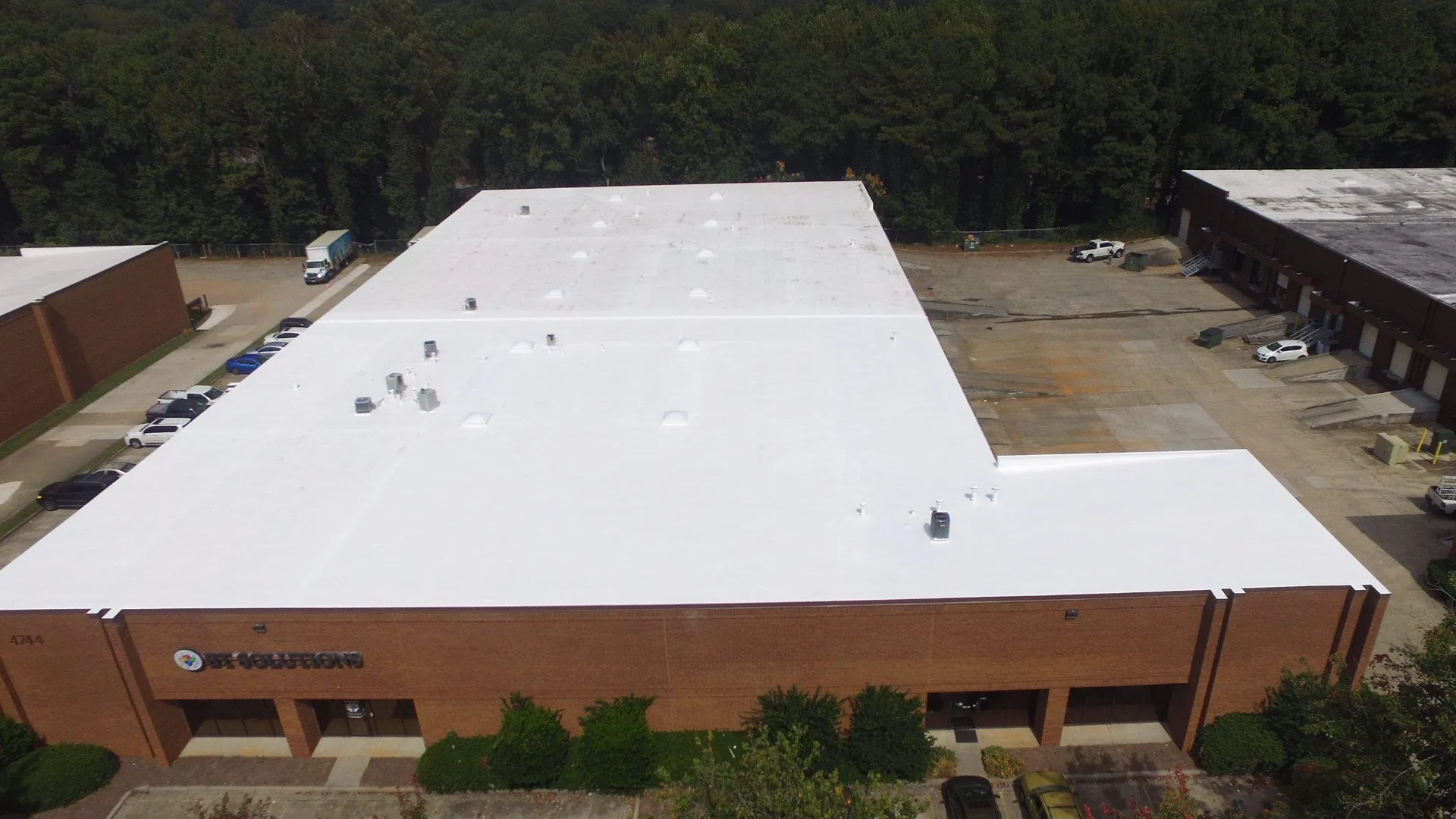
An elastomeric roof coating is a thick, flexible liquid polymer applied over an existing low-slope or flat commercial roof. Once cured, it forms a seamless waterproof membrane that bonds directly to the substrate below.
The coating can stretch significantly and snap back without cracking. It’s important for roofs in Georgia because your roof expands and contracts daily through the summers.
The coating is roughly 10 times thicker than standard exterior paint and serves as a waterproof barrier. It is typically applied by a roller or spray rig in two coats over a properly prepped surface.
Why Georgia’s Climate Makes Coatings Worth Considering
The Heat and UV Problem
Georgia summers drive flat roof surface temperatures well above ambient air, and dark roofs commonly exceed 150°F by mid-afternoon. Constant UV breaks down TPO, EPDM, and modified bitumen faster than the manufacturer’s warranty suggests.
A bright white reflective coating bounces back 80 to 85 percent of solar radiation. It lowers surface temperatures, reduces UV damage to roofing materials, and reduces your building’s cooling load.
Humidity, Thunderstorms, and Ponding
Most of Georgia averages 45 to 50 inches of rain per year, often delivered in heavy summer downpours. Flat commercial roofs with even a slightly compromised drainage develop ponding, and standing water attacks seams and fasteners until a leak finds its way inside.
A seamless coating eliminates the joints where leaks usually start. Also Silicone tolerates standing water much better than other roofing systems.
The Three Main Types of Elastomeric Coatings
Acrylic
Acrylic coatings are water-based, highly reflective, and the most affordable option. They suit sloped roofs that shed water quickly and withstand Georgia’s intense sun. The trade-off is that acrylic will not withstand ponded water and can re-emulsify if puddles sit for days.
Silicone
Silicone roof coating contains around 96 percent solids and offers excellent tolerance against ponding water. It is often the right call for older flat roofs in metro Atlanta, where drainage has worn down. A silicone roof costs more than an acrylic roof, and once applied, only silicone can be recoated over it.
Polyurethane
Polyurethane is the most impact and abrasion-resistant of the three. It is the right choice for roofs that see heavy foot traffic or heavy HVAC equipment. It costs more than acrylic and does not tolerate standing water as well as silicone.
Polyurethane roof coating should not be confused with spray polyurethane foam roofing, which is a complete roofing system that combines a seamless surface with built-in insulation.
When Coating Makes Sense (And When It Doesn’t)
Good Candidates for Coating
Commercial roof coating works when your roof is structurally sound, has proper drainage, and is free of widespread moisture beneath the membrane. The benefits of elastomeric roof coatings are clearest in these scenarios:
- Your existing roof is approaching the end of its warranty, but is not actively failing.
- You want to defer a major capital expense and extend the roof’s life by 10 to 20 years.
- Tear-off would significantly disrupt warehouse, retail, medical, or manufacturing operations.
- Your roof is made of TPO, EPDM, modified bitumen, built-up roofing, metal, or SPF in sound condition.
When Coating Is the Wrong Answer
If more than roughly 25 percent of the roof has trapped moisture or saturated insulation, a coating applied over a wet substrate will fail. The same goes for membranes that are brittle, cracked across large sections, or past their structural lifespan.
Drainage matters too:
If water sits for days, a coating cannot fix the underlying slope problem.
Before you commit, get an infrared moisture survey to reveal what is happening beneath the membrane and whether you should get your commercial roof coated.
What Does an Elastomeric Coating Project Cost in Georgia
In Georgia, the installed cost for a complete elastomeric roof coating system typically ranges from $2 to $5 per square foot. That usually includes surface preparation, primer, and two coats of elastomeric coating. By comparison, a full roof replacement is much more expensive, usually running $5 to $12 per square foot.
For example, coating a 10,000-square-foot warehouse roof would generally cost between $20,000 and $50,000. Tearing off and replacing that same roof could cost anywhere from $50,000 to $120,000.
That cost difference is one of the main reasons many Georgia building owners consider elastomeric coatings before moving straight to replacement. In buildings with heavy cooling demands, the energy savings can also help improve return on investment, often within 2 to 5 years.
Several factors can affect the final price, including the current condition of the roof, how much prep work is needed, the type of coating used, the required mil thickness, and the number of roof penetrations.
Mil thickness is especially important because it often determines the warranty length. That is why two bids for the same building can look very different. A lower bid may include a thinner coating system with a shorter warranty, while a higher bid may include more material, better protection, and a longer warranty.
What to Expect from the Installation Process
Roof coating application is more involved than spraying liquid on a surface. A reputable commercial roof contractor follows a defined sequence:
- Inspection and infrared moisture survey to confirm the roof is a candidate for coating.
- Repair phase: wet insulation replaced, seams and flashings repaired, penetrations sealed, roof leaks addressed.
- Cleaning: power wash with a TSP solution to remove dirt, chalk, mold, mildew, and biological growth.
- Priming where the substrate requires it, which metal roofs and asphaltic systems often need.
- Two coats applied perpendicular to each other to achieve a uniform mil thickness, measured in gallons per 100 square feet.
- Cure time of 24 to 72 hours per coat, with no rain in the forecast.
A coating can only perform well if the surface beneath it is clean, dry, sound, and properly detailed. When contractors skip moisture testing, rush the cleaning, or apply coating over unresolved leaks, the system is far more likely to blister, peel, or fail early.
Before work begins, ask your contractor to explain each step of the process and provide documentation throughout the project, including moisture survey results, repair photos, product data sheets, and final mil thickness measurements.
Frequently Asked Questions
How long does an elastomeric roof coating last in Georgia?
A coating lasts 10 to 20 years, depending on chemistry, mil thickness, and maintenance. Thicker applications carry longer warranties: 20 mils for a 10-year warranty and 30 mils for a 20-year warranty.
Can I apply a coating over my existing TPO, EPDM, or metal roof?
Yes, elastomeric coatings bond to most commercial substrates, including TPO, EPDM, modified bitumen, built-up roofing, metal, and SPF. The roof must be structurally sound, clean, and dry before any coating is applied.
To better understand how these materials differ before choosing a roofing or coating solution, compare the costs, lifespans, and performance of TPO, PVC, and EPDM roofing systems.
Will the coating stop active roof leaks?
Coatings seal small cracks, pinholes, and minor seam failures. They cannot fix major structural damage, large holes, or saturated insulation, so roof repairs always come before coating.
When is the best time of year to schedule a coating project in Georgia?
May through October is the window when daytime temperatures stay between 50°F and 100°F, humidity sits below 85 percent, and dry weather holds for 48 to 72 hours after application.
How to Move Forward Without Guessing
Start by getting an infrared moisture survey from a qualified Georgia commercial roofing contractor. You will find out whether your roof is dry enough to coat.
From there, request bids from two or three roofing companies, specifying in writing the mil thickness, coating chemistry, and warranty length. Compare each coating bid against a full roof replacement quote on the same building. The spread between those numbers, weighed against the years of life you gain, is the answer.
Our team has been coating and replacing commercial roofs across Georgia for years, and we will tell you whether your roof is a candidate before you spend a dollar. Reach out to us to schedule an inspection and moisture survey on your roof.
Call us now
706-819-2584