
Duratec Roofing Solutions
How Long Does a Flat Roof Last in Georgia? Lifespan by Material Type
- $Home
- $How Long Does a Flat Roof Last in Georgia? Lifespan by Material Type
Flat roofs in Georgia typically last 15-30 years, depending on the material. Three factors determine your roof’s actual lifespan: material choice, Georgia’s unique climate challenges, and drainage system performance. Let’s break down what you can expect from each roofing material type.
Key Takeaways
- PVC and EPDM offer the most extended lifespans (25-35+ years) but serve different budgets
- TPO requires a 60-mil thickness minimum in Georgia; 45-mil sheets fail prematurely
- The mid-life coating strategy at year 15 can double your roof’s life
- Ponding water voids warranties and cuts the lifespan in half
- Installation quality matters more than material choice
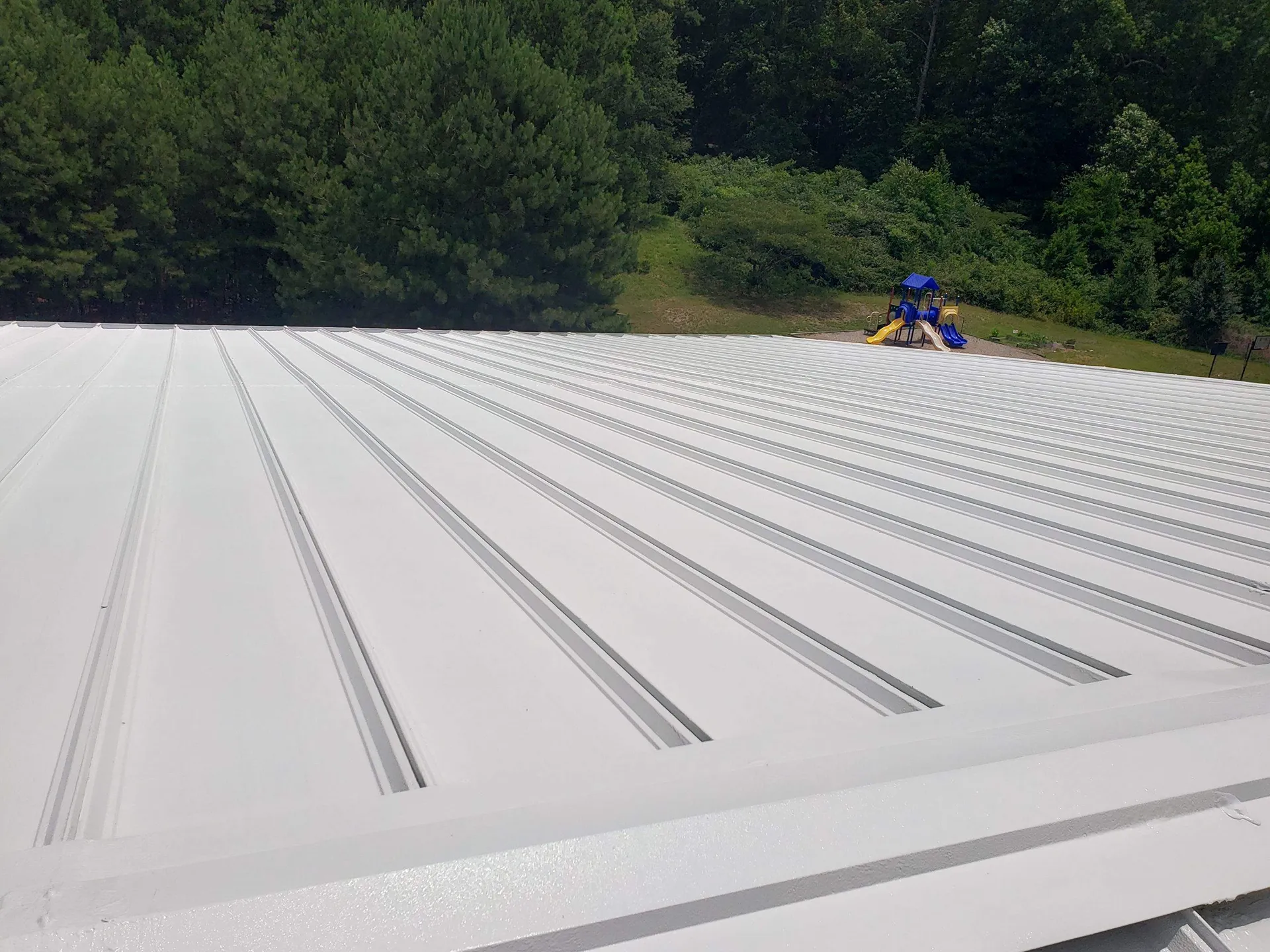
Flat Roof Lifespan by Material Type
PVC Roofs
Lifespan: 20-30 years
PVC excels in Georgia for three critical reasons. First, superior UV resistance protects against our intense summer sun. Second, hot-air-welded seams create bonds as strong as the membrane itself, eliminating the weak points found in adhesive-based systems. Third, the heat-reflective white surface reduces cooling costs significantly during Georgia’s brutal summers.
Maintenance needs are minimal: annual inspections and occasional seam checks. Unlike other materials that require constant attention, PVC holds up remarkably well to Georgia’s thermal cycling, humidity, and heavy rainfall. The upfront cost is premium, but the longevity and low maintenance make it ideal for high-end commercial properties where you want to install once and forget about it for decades.
TPO Roofs
Lifespan: 15-25 years (Avoid 45-mil sheets in Georgia; 60-mil+ required for longevity)
Why it Excels:
TPO hits a cost sweet spot; it delivers PVC-level energy efficiency at a price point closer to EPDM. That white reflective surface significantly lowers cooling costs, which matters during Georgia’s long, hot summers.
Georgia Risks:
Thermal shock is TPO’s nemesis here. Georgia’s famous pattern, 95°F days followed by sudden afternoon thunderstorms, drops roof temperatures from 160°F to 80°F in minutes. This rapid contraction repeatedly stresses seams and flashings, and over the years, these cycles cause separations.
Maintenance Essentials:
Annual seam inspections are critical for catching separations early, before water infiltrates. Here’s the strategy that separates smart property managers from those facing premature replacement: apply a protective coating at year 10. UV stabilizers fade by this point. Wait until the membrane becomes brittle, and restoration is no longer possible; you’re forced into full replacement.
Modified Bitumen
Lifespan: 20-30 years with coating maintenance
Georgia’s heat causes modified bitumen to soften, making reflective coatings essential rather than optional. Plan on recoating every 5-8 years to maintain protection and reach the upper end of that lifespan range.
The material offers good puncture resistance, making it ideal for roofs with heavy equipment or frequent maintenance access. Storm damage repairs and seam monitoring are ongoing requirements; this isn’t a low-maintenance option.
The trade-off is durability. Modified bitumen tolerates Georgia’s weather extremes reasonably well, but only if you stay on top of that recoating schedule. Miss those intervals, and you’ll watch decades disappear from your roof’s life.
Built-Up Roofing (BUR)
Lifespan: 15-20 years in Georgia
Built-up roofing represents old-school reliability, but Georgia’s climate isn’t kind to it. The tar and gravel absorb heat intensely, and UV exposure breaks down the layers faster than in northern climates.
This is the most maintenance-intensive option available. You’ll still find BUR on older commercial buildings across Georgia, but it’s rarely the best choice for new installations. The weight, heat absorption, and constant maintenance needs make it practical only when replacing an existing BUR system where tear-off costs are prohibitive.
EPDM Roofs (Rubber Roofing)
Lifespan: 25-35+ years (The rubber membrane itself is extremely durable and UV stable)
The Georgia “Heat” Problem:
Black rubber can reach temperatures exceeding 170°F in Georgia summers, depending on ambient conditions and sun exposure. While the rubber handles this temperature fine, it significantly increases building cooling costs. The real weak link? The seams. Georgia heat accelerates the degradation of adhesives and tapes through constant thermal cycling and UV exposure. The rubber sheet lasts 30 years, but seams often start popping at year 10-15.
Common Issues:
As EPDM cycles through heat and cold, it shrinks, pulling tight against walls and curbs (flashings), which can cause tears at corners. EPDM is also softer and more prone to punctures from foot traffic or falling branches than PVC.
The Restoration Opportunity:
EPDM is ideal for coating because the “bones”, the rubber sheet, remain structurally sound for decades. You rarely need to tear off an EPDM roof. A white restoration coating seals the failing seams, stops shrinkage, and can lower surface temperature by up to 70°F in ideal conditions, fixing the material’s only two weaknesses (seams and heat absorption).
Flat Roof Material Comparison Table
| Roof Type | Lifespan | Best for Georgia? | Maintenance Level |
|---|---|---|---|
| PVC | 20–30 years | Excellent | Low |
| TPO (60-mil+) | 15–25 years | Good | Moderate |
| Modified Bitumen | 20–30 years* | Fair | High |
| Built-Up Roofing | 15–20 years | Poor | Very High |
| EPDM | 25–35+ years | Good (with coating) | Low–Moderate |
*Requires recoating every 5-8 years
Georgia’s Unique Flat Roof Challenges
Georgia’s climate creates unique roofing stresses that work together, not individually, to accelerate aging.
Intense summer heat and UV exposure are relentless. When temperatures hit 95°F+, your roof surface reaches 160-170°F. This causes thermal expansion during the day and contraction at night, working like bending a paperclip repeatedly.
High year-round humidity accelerates material degradation, particularly in adhesives and coatings. What lasts 30 years in Arizona’s dry climate lasts 20 years in Atlanta’s humidity.
Heavy rainfall, 50+ inches annually, combined with hail and severe storms, creates constant water infiltration threats. One compromised seam plus a thunderstorm equals interior damage.
Thermal Shock
Georgia, particularly in areas like Atlanta and Savannah, is famous for 95°F days followed by sudden afternoon thunderstorms. This drops the roof temperature from 160°F to 80°F in minutes, causing rapid contraction that pulls seams apart over time.
Why this matters: It explains why seams fail here faster than in the North, and why flexible materials (or elastomeric coatings) are vital. The expansion-contraction cycle happens daily during storm season, not just seasonally.
Why Proper Installation Matters More Than Material Choice
Even premium materials fail early with poor installation. You can buy the most expensive PVC membrane and watch it fail in 10 years if installation is sloppy. The type of material matters, but the roofing material used means nothing without proper installation.
Critical installation factors:
- Proper slope for drainage: Minimum 1/4 inch per foot isn’t negotiable
- Seam integrity on single-ply systems: One poorly welded joint compromises the entire roof
- Flashing details around penetrations: HVAC units, pipes, and drains are where most leaks start
- Adequate fastening and adhesion: Your roof must stay attached during high winds
You can’t “cheap out” on labor even if you save on materials. A skilled contractor installing mid-tier material delivers decades of service. A cut-rate crew installing premium material delivers headaches and leak calls within five years. You’re not buying materials, you’re buying expertise. For more insight into how installation quality affects your coverage, review our commercial roofing warranty explanation guide.
Ponding Water: The Silent Killer of Georgia Flat Roofs
Ponding water is water that remains for 48+ hours after rain stops. In Georgia’s high-rainfall climate, this isn’t aesthetic; it’s an active threat.
How ponding damages your roof:
- Accelerates membrane breakdown through constant water exposure
- Can void warranties (most manufacturers exclude ponding damage)
- Weight concerns: 1 inch of water over 20×20 feet equals 2,000 pounds
Common causes:
- Poor slope during installation
- Clogged drains filled with leaf debris
- Compressed insulation from equipment
- Improper installation creates low spots
Prevention strategies:
- Regular drain cleaning (quarterly minimum)
- Adequate slope (1/4 inch per foot minimum)
- Inspection after major storms
Solutions if ponding exists:
- Drain improvements or additional drains
- Tapered insulation to correct low spots
- Possible re-roofing if structurally compromised
How to Maximize Your Flat Roof’s Lifespan in Georgia
Schedule professional inspections:
- Annually at a minimum
- After major storms (hurricanes, hail, severe winds)
- Before and after the summer heat season
Maintain drainage systems religiously:
- Clear drains and gutters quarterly
- Check for ponding after heavy rains
- Address drainage issues immediately
Address minor problems immediately:
In most cases, minor roof repairs cost a few hundred dollars; waiting can lead to damage costing several thousand dollars or more. Watch for small punctures, lifted seams, blistering. Whether you’re a homeowner or commercial property manager, catching issues early protects your investment.
The Mid-Life Restoration Strategy:
In many cases, applying a coating around year 15 can significantly extend your roof’s life, potentially adding 10-15 years of service. This works for TPO, modified bitumen, and EPDM. Miss this window and let the membrane become brittle, and you lose the restoration option entirely, forcing full replacement at two to three times the cost. For a detailed comparison of when restoration is the smarter move and when replacement is unavoidable, check out our commercial roof restoration vs roof replacement guide. The exact timing depends on your roof’s maintenance history, the quality of its original installation, and exposure conditions.
Keep the roof clear of debris:
- Trim overhanging tree branches
- Remove leaves, especially before the rainy season
- Georgia’s trees drop debris year-round
Additional best practices:
- Apply protective coatings on schedule (adds 5-10 years)
- Limit foot traffic (use walkway pads if needed)
- Document everything (inspection and maintenance records prove you maintained the system if warranty claims arise)
Warning Signs Your Georgia Flat Roof Needs Replacement
Watch for these red flags:
- Age approaching or exceeding the expected lifespan for your material
- Persistent ponding water that won’t drain within 48 hours
- Widespread cracking, bubbling, or blistering (not just isolated spots)
- Multiple leak locations (indicates systemic failure)
- Visible sagging or soft spots when walking on the roof
- Deteriorating seams across large portions of the roof
- Interior water damage or visible staining
- Energy bills increasing (indicates insulation compromise)
- Repair costs are approaching 30% of the replacement cost
Note: One or two signs may indicate repair; multiple signs indicate replacement conversation.
Frequently Asked Questions
My roof is black rubber (EPDM). Should I replace it with white TPO?
Not necessarily. If the insulation is dry, you can coat the black rubber with a white solar-reflective coating. Depending on your building’s cooling load and current energy costs, you can achieve significant energy savings at approximately half the price of a complete tear-off and replacement.
Does insurance cover roof replacement in Georgia?
Generally, insurance covers sudden damage (hail, tornadoes, fallen trees) but not wear and tear (old age/leaks). However, a thorough inspection might reveal hail damage you didn’t see, which could qualify for a claim.
How do I know if my TPO roof is too old to restore?
Do the “Bend Test.” If the contractor cuts a small sample and bends it, and it cracks, the membrane is too brittle to restore. It must be replaced.
Why do my seams keep popping open?
This is likely due to thermal shock. Georgia summer rains cool the roof rapidly, causing materials to contract quickly. If the adhesive has aged and lost flexibility, the seam can separate under this stress.
What’s the most popular roofing option for commercial buildings in Georgia?
TPO has become the most popular roofing choice due to its balance of cost and performance. However, the material used should match your specific building needs, budget, and long-term plans. Your roof system can last anywhere from 15 to 35+ years, depending on the type of roofing you choose and how well you maintain it.
Can the same roof repair work for different roofing materials?
Not always. Each type of roofing requires specific repair techniques and compatible materials. What works for EPDM won’t work for PVC. This is why working with experienced contractors who understand the material used on your roof is critical for lasting repairs.
Conclusion
Material, installation, and maintenance add up to maximum lifespan. In Georgia’s challenging climate, you can’t afford to neglect any of these three factors. The extra investment in quality pays off in years of additional service, the difference between a roof that lasts 15 years versus one that reaches 35. Your roof may face unique challenges, but with the right roofing option and proper care, you can maximize its service life.
Ready to maximize your flat roof’s longevity? Schedule a free inspection with Duratech Roofing Solution, Georgia-certified commercial roofing experts, today.
Call us now
706-819-2584