
Duratec Roofing Solutions
The Benefits of Reflective Roof Coatings in Georgia’s Hot Climate
- $Home
- $The Benefits of Reflective Roof Coatings in Georgia’s Hot Climate
If your Georgia home feels hotter than it should in summer, your roof is probably part of the problem.
Day after day, it absorbs intense sun and traps heat in your attic, making your AC run longer and your rooms—especially upstairs—feel uncomfortable. The good news is you may not need a full roof replacement to fix it.
Reflective roof coatings can cut roof temperatures, lower cooling bills, and help your roof last longer. So let’s look at how they work, what they cost, and whether they’re a fit for your home.
Key Takeaways
- Reflective roof coatings can lower roof surface temperatures by up to 50°F in Georgia summers, helping keep the home cooler and easing AC workload.
- Many Georgia homeowners see 10–30% lower annual energy bills, with typical payback in 3–7 years (often faster in well-insulated homes).
- Coatings can extend roof life by 10–15 years on roofs in good condition by reducing UV damage and thermal stress.
- Professional installation usually costs $0.75–$3.00 per sq. ft., making it a budget-friendly option compared with full replacement.
- Most quality coatings last 10–20 years overall; acrylic typically 5–20 years and silicone typically 10–20 years in Georgia’s climate.
How Reflective Roof Coatings Work
The Science Behind Cool Roofs
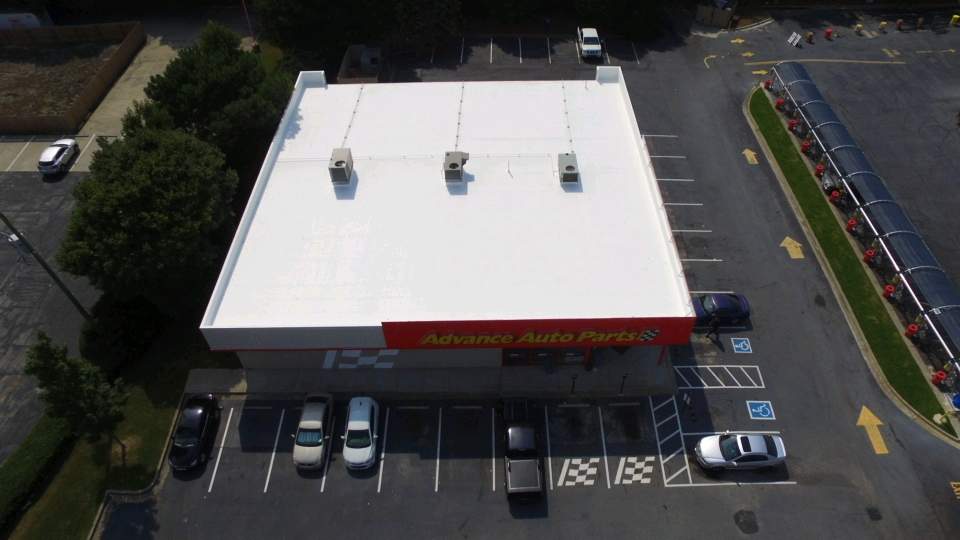
A cool roof works through two key properties: solar reflectance and thermal emittance. Solar reflectance acts like a mirror, bouncing sunlight away from your rooftop before it can turn into heat. Thermal emittance releases any absorbed heat back into the atmosphere rather than letting it sink into your home.
The Solar Reflectance Index (SRI) measures how effective a roof is at rejecting heat. Traditional dark roofs have an SRI of approximately 20-30 and absorb most of the sun’s heat.
Reflective coatings increase this to an SRI of 80-100+, which corresponds to higher reflectance and cooler surface temperatures.Think of it like wearing dark versus light clothing on a hot day; your roof works the same way.
Why Georgia’s Climate Demands Reflective Solutions
Georgia’s relentless sun and steamy heat turn your roof into a hot, stressed surface, making reflective coatings a smart investment.
Energy Savings: Lower Bills and Better Comfort
Measurable Cost Reductions
Most Georgia homeowners see annual savings of 10-30% on cooling costs after applying a reflective coating. Well-insulated homes often fall at the higher end of that range, while even basic installations deliver at least a 10% reduction.
Peak demand reduction is where you’ll notice the biggest difference. During the hottest parts of the day, when electricity rates are highest, your coated roof dramatically reduces the load on your AC.
The return on investment timeline is straightforward, with installation costs averaging $0.75-$3.00 per square foot and typical payback periods of 3-7 years.
Real Comfort in Georgia Summers
Your upstairs becomes livable during July and August. Second-floor bedrooms won’t feel like ovens anymore, and temperature consistency throughout your home improves dramatically.
Your air conditioning unit gets a break. When it doesn’t run constantly during peak heat, you reduce wear and tear, extend equipment life, potentially save thousands in replacement costs, and reduce emergency repair calls during the hottest months.
Extending Your Roof’s Lifespan
Protection Against Georgia’s Elements
UV damage prevention is the primary way reflective coatings extend the life of your existing roof. Heat is the #1 contributor to roofing material degradation, so a cooler roof means significantly less thermal stress on shingles, underlayment, and seals.
This prevents premature cracking, warping, and granule loss, plus fewer issues with curling shingles, blistering, and storm damage.
Georgia’s day-to-night temperature swings cause roof materials to expand and contract constantly. Reflective materials reduce thermal cycles by 50°F or more, resulting in less movement and fewer cracks, leaks, and failures.
The result is an additional 10-15 years of service for roofs in good condition. This delays a costly roof replacement, which typically costs $8,000-20,000 (averaging $12,000-16,000 for typical Georgia homes).
Types of Reflective Roof Coatings for Georgia Homes
Let’s talk about two most popular reflective roof coatings for Georgia homes, each with its own strengths, lifespan, and cost trade-offs.
Acrylic Coatings
Acrylic is best suited to well-drained sloped roofs, which cover most Georgia residential properties. These coatings last 5-20 years, depending on quality and maintenance.
Key benefits include:
- Excellent UV resistance for Georgia’s intense sun
- Good reflectivity that significantly reduces rooftop temperatures
- Most affordable option among quality coatings
- Easy to apply and maintain
The main consideration is that acrylic isn’t ideal for flat roofs with ponding water.
Silicone Coatings
Silicone works for all roof types but especially shines on flat or low-slope roofs. With a lifespan of 10-20 years, silicone typically outlasts acrylic coatings.
Key benefits include:
- Superior waterproofing for Georgia’s heavy summer rains
- Excellent resistance to ponding water
- High UV stability
- Better long-term durability
The trade-off is a higher upfront cost, but the extended lifespan often makes silicone the better value over time.
What’s right for your home? A qualified roofing contractor will assess your roof’s slope, material, and condition to recommend whether acrylic or silicone coating is the better fit for your home and budget.
What to Expect: Installation Process and Costs
Professional Installation Steps
Installation begins with a thorough roof inspection to identify damage, leaks, or needed repairs. All repairs must be completed before coating; you can’t coat over problems. Once everything’s fixed, the surface needs to be prepared.
Surface preparation involves pressure washing to remove debris, dirt, and algae. The actual application usually requires a base coat and top coat, with proper thickness critical for warranty coverage and performance. Most installations are completed in 1-2 days for an average Georgia home.
Cost Breakdown
Expect to pay $0.75-3.00 per square foot, installed, for materials and labor. For a typical 2,000 square foot Georgia home, that translates to $1,500-6,000 for the total project.
Cost variables include:
- Roof size and complexity
- Coating type (silicone costs more than acrylic)
- Roof condition (repairs needed, add cost)
- Number of coats required
Compare that to $8,000-20,000 for a full roof replacement (averaging $12,000-16,000 for typical Georgia homes), and the value proposition becomes clear.
Ready to explore reflective roof coatings for your Georgia home? Duratec Roofing provides professional coating installations with free assessments. Contact us today to see how much you could save.
Maintenance and Longevity
How Long Do Coatings Last?
Acrylic coatings typically last 5-20 years, while silicone coatings last 10-20 years. Lifespan depends on Georgia’s specific weather, application quality, regular maintenance, and roof traffic.
Simple Maintenance Tips
To keep a reflective roof coating performing well, follow a simple maintenance routine throughout the year:
- Schedule an annual roof inspection, especially after storm season
- Clear debris regularly (leaves, branches, and buildup) to prevent damage
- Fix small issues quickly so they don’t turn into costly repairs
- Wash the roof every 2–3 years to maintain reflectivity, since dirt reduces performance
- Get a professional inspection every 3–5 years for a deeper check and upkeep guidance
Energy Savings Comparison: Traditional vs. Reflective Roof in Georgia
| Metric | Traditional Dark Roof | Reflective Coated Roof | Difference |
|---|---|---|---|
| Peak Summer Roof Temperature | 150°F | 100°F | 50°F cooler |
| Solar Reflectance (SRI) | 20-30 | 80-100+ | Much higher reflectance |
| Annual Cooling Cost (2,000 sq ft home) | Baseline | 10-30% reduction | $180-540/year savings (typical) |
| Attic Temperature Reduction | Baseline | 15-25°F cooler | Significant |
| Estimated Roof Lifespan Extension | Baseline | +10-15 years | Delays replacement |
| ROI Timeline | N/A | 3-7 years | Through energy savings |
Frequently Asked Questions
Can reflective roof coatings be applied to any type of roof?
Yes, reflective roof coatings can be applied to most roof types, including asphalt shingles, metal, tile, and flat roofs, but the roof needs to be in good condition first since coatings won’t fix structural issues or major damage, so a professional inspection is the best way to confirm compatibility.
Will a reflective coating void my roof warranty?
It can, depending on your roof manufacturer’s terms, so it’s important to check your warranty before applying a coating. Many coating brands offer their own warranties, and for older roofs, many homeowners decide the performance benefits are worth it even if the original warranty no longer applies.
How much maintenance does a reflective coating require?
Reflective roof coatings need very little upkeep: do a yearly inspection (especially after storms), keep the roof clear of debris, wash it every 2–3 years to maintain reflectivity, and schedule a professional inspection every 3–5 years.
Overall, it’s typically easier than maintaining an uncoated roof.
Do reflective coatings work in winter or only during hot months?
Reflective coatings help the most during Georgia’s hot season, typically from April through October, when they cut rooftop heat and reduce cooling costs. In winter, there can be a small “heating penalty” because the roof reflects some warmth you might otherwise absorb, but Georgia’s mild winters usually make that effect minimal.
For most homes, the cooling savings outweigh any slight winter trade-off, so the overall impact stays positive across the year.
Are there any tax credits or rebates for reflective roof coatings in Georgia?
For most Georgia homeowners, there isn’t a dedicated tax credit or rebate specifically for standard reflective roof coatings.. However, Georgia Power offers a $ 0.05-per-square-foot rebate for ENERGY STAR-certified reflective roofing (up to $10,000 per building), though you should verify current 2026 program availability and requirements.
Install a Cool Roof: Making Your Decision
Reflective roof coatings deliver three major benefits: lower energy bills, extended roof life, and dramatically improved comfort during brutal summer months. The energy savings alone typically cover the installation cost within 3-7 years, and the benefits of cool roofs continue for 10-20 years beyond that payback period.
In Georgia’s hot climate, where cooling costs dominate your energy bill and intense UV exposure accelerates roof deterioration, a reflective coating makes exceptional financial sense. It’s a fraction of the cost of a new roof while delivering performance benefits that reduce both your operating costs and your long-term capital expenses.
If your existing roof is in good condition but you’re experiencing high energy costs and a shortened roof life due to Georgia’s punishing heat, get a professional assessment. Protect your investment, lower your bills, and stay cooler this summer.
Many contractors offer financing plans that spread costs over 5-10 years.
Call us now
706-819-2584