
Duratec Roofing Solutions
Flat Roof Repair: Common Problems and Solutions
- $Home
- $Flat Roof Repair: Common Problems and Solutions
Flat roofs on commercial buildings face challenges that sloped roofs simply don’t. This guide breaks down the most common flat roof problems and how to fix them before they drain your budget.
Key Takeaways
- Most common flat roof problems, including ponding water, membrane damage, and flashing failures, get expensive fast if ignored.
- Regular inspections (twice a year and after major storms) are the most effective way to catch issues early.
- Repairs range from patching and sealants to membrane replacement and drainage improvements.
- A roof coating can extend your flat roof’s lifespan by 10 to 15 years while lowering cooling costs.
- Knowing when to repair versus replace saves you from pouring money into a roof past the point of return.
Common Flat Roof Problems on Commercial Buildings
Here are some of the most common issues flat roofs face that you need to be aware of.
Ponding Water
According to the National Roofing Contractors Association (NRCA), ponding water is any water that remains on your roof surface 48 hours or more after rainfall. If you’re seeing it, your drainage system isn’t doing its job.
Causes include clogged drains, sagging from structural settling, and design flaws in the original slope. Left alone, ponding will cause leaks and accelerate the deterioration of the roof membrane.
Membrane Damage (Cracks, Blisters, and Tears)
Your roof membrane (EPDM, TPO, PVC, or modified bitumen) is the primary waterproofing barrier. When it breaks down, water reaches the insulation underneath.
Common causes include:
- UV exposure that degrades the roof material over time
- Foot traffic from HVAC technicians and maintenance crews
- Debris impact from falling branches or dropped tools
- Temperature swings that cause the membrane to expand and contract, weakening seams (called thermal movement)
The damage shows up as cracking, blistering (sometimes called alligatoring), punctures, or shrinkage. These flat-roof issues may seem minor, but even a small breach can lead to water damage and mold growth.
Flashing Failures
Flashing is the material that seals transitions and penetrations on your roof, including around HVAC curbs, vents, skylights, and parapet walls.
It fails due to poor installation, corrosion, thermal movement, and age. Flashing failures are among the most common sources of roof leaks in commercial buildings, so check your flash points if you notice leaks near the edges.
Wind and Storm Damage
Flat roofs are especially vulnerable during strong winds and storms because their large, continuous membrane surface can lift more easily than other roof types. If the membrane tears, a wide area can be exposed, allowing water to get in quickly. Storm debris can also strike the roof and puncture the surface on impact.
It is important to have the roof inspected after any major weather event because even small damage can lead to bigger problems.
Flat Roof Problems at a Glance
| Problem | Common Causes | Warning Signs | Urgency Level |
|---|---|---|---|
| Ponding Water | Poor drainage, clogged drains, and low spots | Visible puddles 48+ hrs after rain, staining, and algae growth | High: address within weeks |
| Membrane Damage | UV exposure, foot traffic, thermal movement, debris impact | Cracking, blistering, visible tears, soft/spongy spots | High: repair promptly |
| Flashing Failures | Poor installation, corrosion, thermal shifting, and age | Leaks near edges, HVAC units, skylights, or parapet walls | High: common leak source |
| Wind/Storm Damage | High winds, flying debris, severe weather events | Lifted or peeled membrane, visible tears, debris on the roof | Urgent: inspect immediately |
Proven Flat Roof Repair Solutions
Patching and Sealants
Patching is the first-line repair for small punctures, minor tears, and localized leaks caught early.
Clean the damaged area and apply a patch or sealant designed for your specific membrane type. The patch must be compatible with your existing membrane.
Note: This is not a DIY job, as incorrect application can void warranties.
Roof Coatings
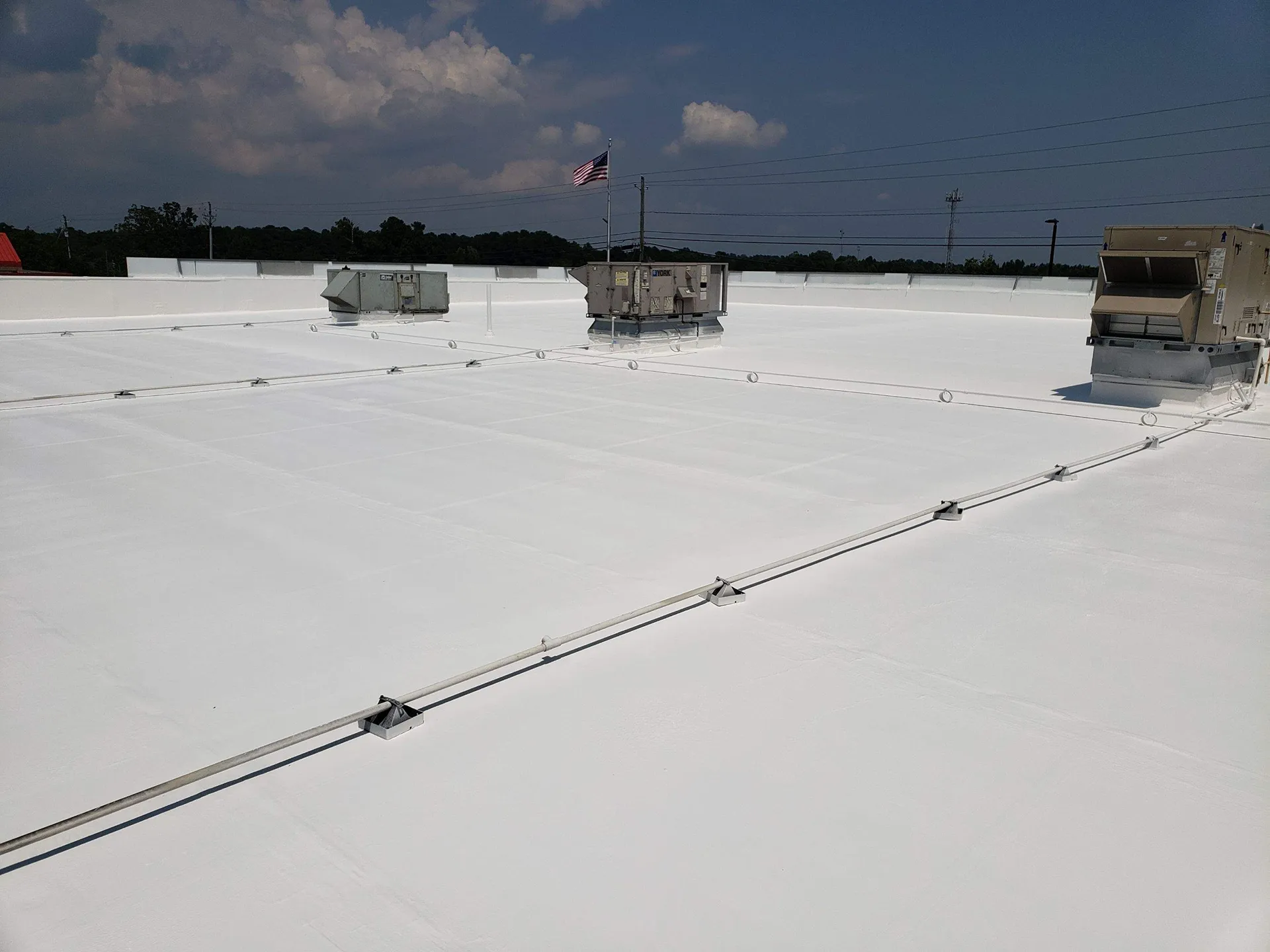
If your roof is getting older and showing signs of surface wear but doesn’t have major leaks, applying a roof coating can be a cost-effective solution.
Coatings such as silicone, acrylic, or elastomeric materials form a seamless, waterproof layer over the existing roof. This added layer can extend the life of your roof by 10 to 15 years and may lower cooling costs by up to 20% by reflecting heat. However, coatings are only effective if the roof underneath is still in good condition.
Membrane Replacement
When you’re dealing with extensive membrane damage or saturated insulation, patching won’t cut it. In those cases, the damaged section needs to be removed and replaced with a new membrane that is properly sealed and adhered.
Often, a full replacement is not necessary. A roofing contractor can replace only the compromised areas while leaving the sections that are still in good condition untouched.
Drainage Improvements
If ponding water keeps coming back, you’re treating the symptom instead of the cause. Apply the following drainage solutions to address the root problem:
- Tapered insulation to create a proper slope
- Additional drain points or scuppers to handle the water volume
- Regular maintenance of existing drainage to keep water moving away from the surface
For a more complete prevention plan, follow our commercial roof maintenance checklist to keep drains, membranes, flashing, and roof surfaces in good condition year-round.
Note: A proactive investment prevents recurring ponding from destroying a sound roof.
When to Repair vs. Replace Your Flat Roof
Deciding whether to repair or replace your flat roof becomes much easier when you follow a clear set of factors.
Repair is usually the better choice when the damage is limited to one or two areas, the roof is less than 15 years old, the structure and insulation are still in good condition, and the repair cost is far lower than a full replacement.
Replacement makes more sense when leaks keep appearing in different areas, the membrane has reached the end of its expected life, the insulation is waterlogged and no longer effective, or repeated repair costs are getting close to the price of a new roof
As a general rule, if repairs would cost more than 30% of a replacement, replacing the roof is often the better long-term investment. Before making a final decision, schedule a professional roof inspection to confirm the roof’s condition.
Frequently Asked Questions
How often should I have my commercial flat roof inspected?
Schedule regular inspections twice a year (spring and fall). Also after any severe weather event. Catching small problems during routine checks prevents expensive emergency repairs.
How much does a typical commercial flat roof repair cost?
Minor repairs typically range from $300 to $2,500. Larger repairs involving membrane or insulation replacement can run $3,000 to $8,000 or more.
Can I apply a roof coating over my existing damaged membrane?
Coatings work well over aging membranes with surface-level wear, but significant tears or structural damage must be repaired first. A professional roof inspection determines whether your roof is a good candidate.
How long does a flat roof repair typically last?
How long a flat roof repair lasts depends on the type of repair and the condition of the roof underneath. A well-done patch on an otherwise healthy roof can often hold up for 5 to 10 years, especially if the area was properly sealed and the roof continues to be maintained.
A roof coating usually lasts longer, often adding 10 to 15 years of service life, because it covers and protects a much larger surface. In either case, the repair will only last if the roof was installed correctly to begin with and is inspected and maintained over time.
What should I do if I notice a leak between scheduled inspections?
Contact a commercial roofing contractor immediately. Even small leaks can cause rapid interior water damage and mold growth. Document the leak location and any visible damage for the contractor.
Protect Your Roof Before the Next Storm
Most common flat roofing problems are avoidable with consistent flat roof maintenance. The best place to start is with a professional inspection so you know exactly what needs attention now.
Get quotes from at least two licensed roofing contractors, and ask specifically about the condition of your membrane, flashing, and drainage. When issues are addressed promptly, a small flat roof repair stays small.
Schedule your next regular roof inspection this week and get a clear picture of your roof’s condition before the next storm hits.
Call us now
706-819-2584