
Duratec Roofing Solutions
Commercial Roof Maintenance Checklist: Protect Your Investment
- $Home
- $Commercial Roof Maintenance Checklist: Protect Your Investment
Most roof problems begin as small issues: a loose flashing detail, clogged drainage, cracked sealant, trapped debris, or minor surface damage that goes unnoticed for too long. By the time water appears inside the building, the repair is often more expensive and disruptive than it needed to be.
A consistent roof maintenance routine helps property owners identify problems early, extend the service life of the roof, protect warranty coverage, and avoid preventable leaks. The following maintenance steps can help keep your roof performing properly year-round.
Key Takeaways
- Scheduling professional commercial roof inspections twice per year, in spring and fall, is the foundation of any effective roof maintenance program.
- Clearing debris and maintaining drainage prevents standing water, the most common cause of premature roof failure.
- Proactive maintenance can extend roof life by 30-50% and significantly reduce lifetime repair costs.
- Documenting every inspection, repair, and issue protects your warranty coverage and helps substantiate insurance claims.
- A seasonal roof maintenance checklist for your commercial property prevents small problems from becoming emergencies.
Why a Maintenance Checklist Matters for Your Commercial Roof
Skipping routine maintenance opens the door to water infiltration, mold growth, damaged inventory, business disruption, and voided warranties. Any one of those can cost you more than years of preventative maintenance combined.
According to a Roofing Contractor industry report, over 80% of commercial roofs are replaced prematurely. Most often because property owners take a reactive approach instead of following a regular roof maintenance plan.
Buildings magazine reports the same: proactively maintained roofs average 21 years of service life versus just 13 for reactively maintained ones.
Most manufacturer warranties require documented maintenance to remain valid. If you skip inspections and something fails, you may be on the hook for a full roof replacement out of pocket.
Your Commercial Roof Maintenance Checklist
Follow the steps below to build a consistent roof maintenance routine, protect your building, and extend the life of your commercial roofing system.
1. Schedule Biannual Professional Inspections
Your commercial roof needs a professional commercial roof inspection at a minimum twice per year, once in spring and once in fall, as recommended by the National Roofing Contractors Association (NRCA). You should also schedule an inspection after any major storm, hail event, or period of high winds.
A professional roof inspector catches what a walk-through won’t: membrane deterioration, thermal bridging, and moisture intrusion hiding beneath the surface. These seemingly menial problems are the ones that turn into six-figure repairs when left undetected.
It’s also essential to document these inspections so that they can serve as critical documentation for warranty compliance and insurance claims.
2. Clear Debris and Clean Roof Surfaces
Debris removal is one of the simplest maintenance tasks on this checklist, but it plays a major role in preventing long-term roof damage.
Start by checking the roof surface for any debris that has built up over time. Leaves, branches, trash, and dirt often collect around HVAC units, parapets, raised surfaces, corners, and roof edges.
If left in place, that debris can trap moisture against the roofing materials, speed up surface deterioration, and block drainage paths. Over time, even a small buildup can lead to bigger roofing problems.
As a general rule, inspect the roof for debris at least once a month. Buildings near trees or in areas with heavy seasonal leaf fall may need to be checked more often. Pay special attention to areas around rooftop equipment, since debris tends to collect there first.
3. Inspect and Maintain Drainage Systems
Clogged gutters, downspouts, and internal drains rank among the top causes of commercial roof failure. That’s because standing water adds weight stress to your roof system and eventually works its way through seams and penetrations, especially on flat and low-slope commercial roofs.
Here’s what you need to do every month:
- Check all drainage points for clogs, sagging gutters, and loose fasteners.
- Look for overflow areas and slow-draining spots after rainfall.
- Prune nearby trees to limit the debris entering your drainage system.
If you do nothing else on this inspection checklist, keep your drainage clear.
4. Examine the Roof Membrane and Surface
Your roof membrane is the primary barrier between your building and the elements. During each inspection, look for specific damage types:
- Cracks, blisters, and bubbling on the membrane surface
- Tears or punctures, especially near high-traffic areas
- Wear at seams and joints where membrane sections connect
A well-maintained membrane on a commercial roofing system can last 20-30 years or more. If you find issues, flag them for professional roof repair. DIY patching on the membrane can void your manufacturer’s warranty, turning a minor fix into a major liability.
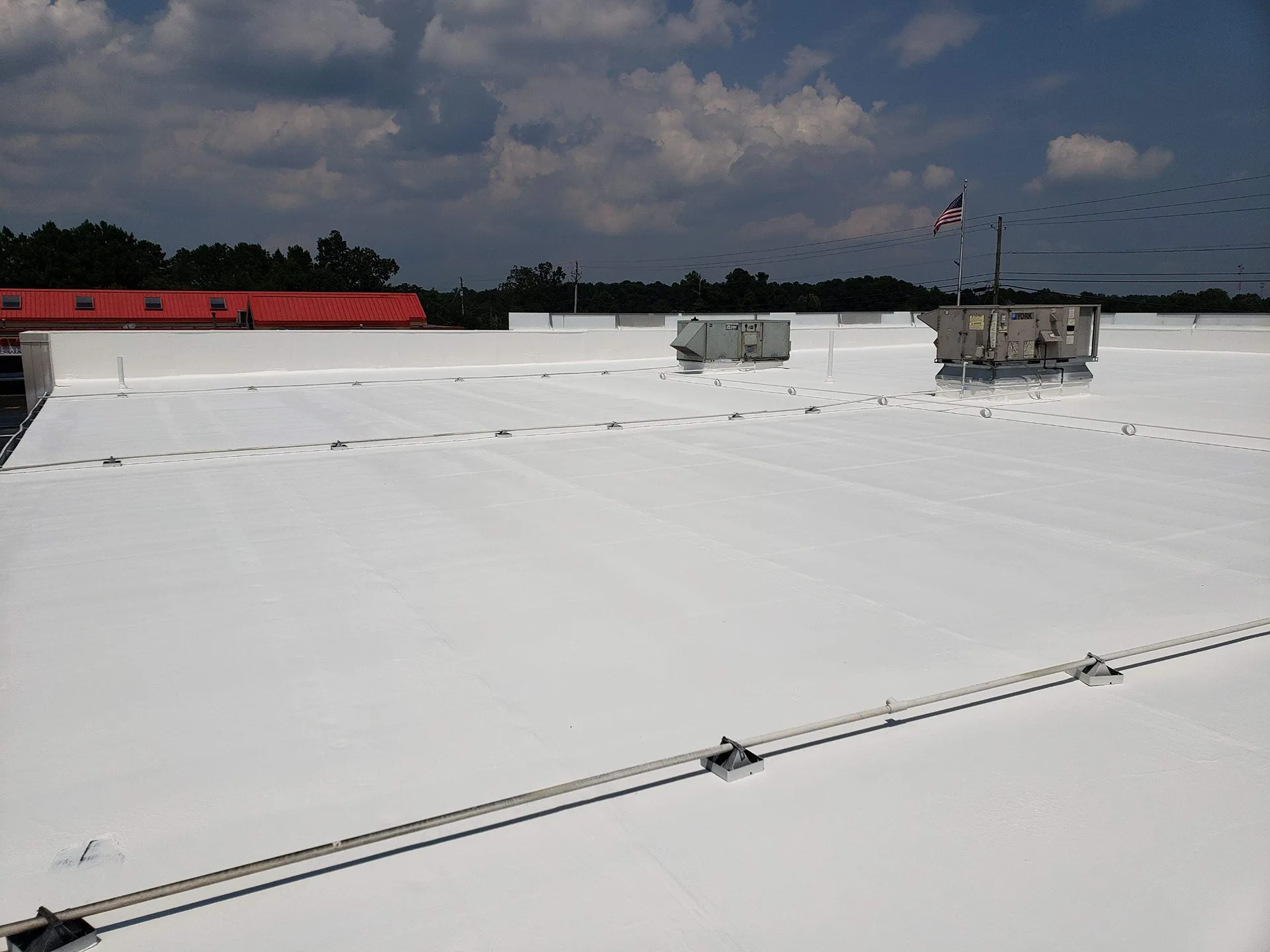
If your membrane is aging but still structurally sound, an elastomeric roof coating in Georgia may help extend its service life without a full roof replacement.
If the membrane is still structurally sound, commercial roof coatings can save money by extending its service life and postponing the need for a full replacement.
5. Check Flashing and Sealants Around Penetrations
Every pipe, vent, HVAC unit, skylight, and access point on your roof is a potential source of leaks, and these roof penetrations are where most leaks start.
Since these areas break the roof’s surface, they need closer attention during every maintenance check.
- Inspect flashing for rust, lifting, or separation from the roof surface.
- Check sealants and caulking for cracking, shrinking, or gaps. These materials expand and contract with temperature changes and degrade faster than the roof itself.
- Plan to re-seal and re-caulk as part of your annual maintenance routine.
6. Manage Rooftop Traffic and Equipment Areas
Foot traffic from HVAC technicians, maintenance crews, and inspectors can puncture membranes and compress insulation, causing unexpected damage.
If your building has frequent rooftop access, follow the steps below to extend your roof’s lifespan.
- Establish a roof access policy with sign-in logs and designated walk paths.
- Install walk pads in high-traffic zones, particularly around mechanical units.
- Inspect areas around rooftop equipment regularly for cracks or wear caused by vibration and repeated foot traffic.
7. Document Everything
Most manufacturer warranties require documented maintenance as a condition of coverage, so a gap in your records could result in a denied claim. Insurance companies may also reference your maintenance history when evaluating claims, and missing documentation can significantly reduce your payout.
That is why it is essential to keep a digital or physical file of every roof inspection report, photo, repair receipt, and maintenance record. Create a simple roof maintenance log that includes dates, findings, actions taken, and roofing contractor details for each visit.
Quick-Reference: Seasonal Maintenance Schedule
Use this table as a printable reference to keep your comprehensive checklist on a seasonal rhythm.
| Season | Maintenance Tasks |
|---|---|
| Spring | Full professional inspection, clear winter debris, check drainage systems, inspect membrane for winter damage, re-seal cracked caulking |
| Summer | Monitor for ponding water after storms, inspect HVAC equipment areas, check for UV/heat damage on the membrane, and trim overhanging branches |
| Fall | Second professional inspection, clean all gutters and downspouts, clear leaves and debris, verify flashing integrity before winter |
| Winter | Remove snow if it exceeds load limits, check interior ceilings for leak signs, and ensure drains remain clear of ice buildup |
When to Call a Professional vs. Handle It Yourself
Not every task on this preventative maintenance checklist requires a commercial roof contractor. Here’s where to draw the line:
You can safely handle:
- Debris removal and roof surface cleaning
- Visual inspections from safe access points
- Gutter and downspout cleaning
- Maintaining access logs and documentation
Call a licensed roof company for:
- Membrane repairs or replacement
- Flashing replacement
- Leak investigation and diagnosis
- Post-storm damage assessments
- Any work involving warranty-sensitive components
Frequently Asked Questions
How often should you have your commercial roof professionally inspected?
At a minimum, schedule inspections and preventative maintenance twice per year, in spring and fall. You should also book an inspection after any major storm or severe weather event. Older roofs or buildings with heavy rooftop equipment may need more frequent assessments.
What are the most common signs that your commercial roof needs immediate attention?
Visible ponding water, active leaks or water stains on interior ceilings, cracked or lifted flashing, and membrane tears or blistering are all red flags. Contact a licensed roofing contractor rather than attempting a repair yourself.
Does skipping routine maintenance void your roof warranty?
In most cases, yes. Nearly all commercial roofing manufacturers’ warranties require documented routine maintenance as a condition of coverage. Without records, a warranty claim can be partially or fully denied.
How much can proactive roof maintenance save compared to reactive repairs?
The Firestone/ProLogis study found that proactive maintenance costs roughly $0.14 per square foot annually, compared to $0.25 per square foot for reactive repairs. Over the life of a 25,000-square-foot industrial roof, that difference adds up to over $200,000 in savings while also extending the lifespan of your roofing system.
Roof Maintenance Is Really Risk Management
The real value of roof maintenance is not in checking items off a list. It is in staying ahead of problems that are easy to miss until they become expensive, disruptive, or difficult to prove in a warranty or insurance claim.
A roof that is inspected, cleaned, repaired, and documented regularly gives property owners more control. It reduces uncertainty, supports better budgeting, and helps prevent emergency decisions when damage has already spread. Whether your roof is new, aging, or somewhere in between, the best time to protect it is before there is a visible leak.
Call us now
706-819-2584