

Duratec Roofing Solutions
5 Causes of Ponding Water on Flat Roofs and How to Prevent Them
- $Home
- $5 Causes of Ponding Water on Flat Roofs and How to Prevent Them
Water that remains on a flat roof for more than 48 hours after rainfall is classified as ponding water, and it puts your building’s structure, membrane, and budget at risk.
Let’s find out what causes water to pond on the roof and how to prevent it.
Key Takeaways
- Ponding water is any water that remains on your roof surface for more than 48 hours after precipitation ends, signaling a drainage or roof design problem that needs attention.
- The most common causes of ponding water include clogged drains, inadequate drainage slope, structural settling, compressed roof insulation, and obstructions from rooftop HVAC equipment.
- Left unaddressed, persistent ponding accelerates roof membrane deterioration, increases structural loads, and can void your manufacturer’s warranty.
- Most ponding issues can be prevented or corrected through regular drain clearing, tapered insulation, additional drainage points, and scheduled professional inspections.
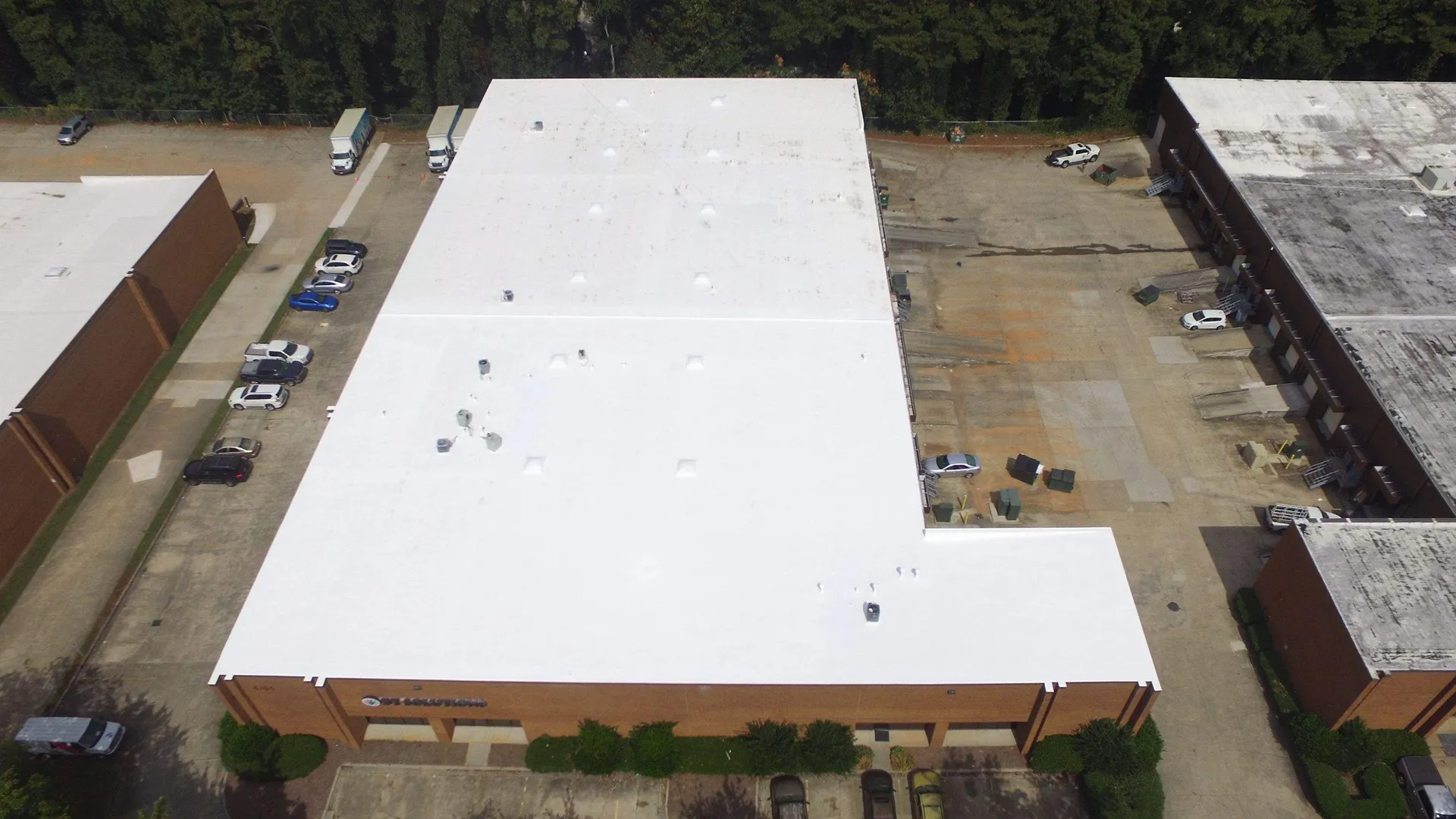
What Is Ponding Water on a Flat Roof?
Flat roofs aren’t perfectly flat. Building codes require a minimum slope of 1/4 inch per foot so that water drains toward scuppers, gutters, or interior roof drain outlets. When that system works correctly, surface water should flow off the roof or evaporate within hours.
Ponding on a flat roof occurs when water accumulates in areas where it has nowhere to drain and remains on the roof for more than 48 hours under normal drying conditions. According to the Asphalt Roofing Manufacturers Association (ARMA), this threshold separates routine post-rain wetness from a condition requiring professional evaluation.
How to Tell If Your Roof Has a Ponding Problem
You don’t always need to climb onto the roof to spot trouble. Several indicators are visible from inside the building or during a routine walkthrough:
- Water is still sitting on any part of the roof 48 hours after the last rainfall
- Dirt rings, staining, or algae growth in the same spots after every storm
- Sagging or soft areas on the membrane surface
- Ceiling stains or damp spots on interior surfaces directly below flat roof sections
What Causes Ponding Water on Commercial Flat Roofs?
Ponding rarely has a single cause. Understanding which factors apply to your building helps you and your roofer choose the right fix the first time.
Clogged or Blocked Drainage
A clog in your drainage system is the most common and most fixable cause of water pooling on commercial roofs. Leaves, dirt, trash, and loose roofing granules build up around interior drains, scuppers, and gutters over time. Georgia’s frequent thunderstorms quickly push debris toward these points.
When a drain is blocked, it functions like a plug in a bathtub. Water rises, pressures seams, and can force moisture into small cracks that would never leak under normal conditions. Pay attention to birdcage strainers (the dome-shaped covers over interior drains) during inspections, as they can become buried under accumulated material.
Inadequate Roof Slope
Building codes require a minimum slope of 1/4 inch per foot for a low-slope roof, but many older Georgia commercial buildings were built to bare-minimum specifications. Over time, material compression and settling can eliminate what little pitch existed at installation, creating areas where water collects with no path to a discharge point.
Structural Settling and Deck Deflection
Older commercial buildings shift gradually due to weight, ground movement, and foundation settling. These shifts may be invisible at ground level, but on a low-slope roof, even a fraction of an inch of movement can redirect the flow of water across the surface.
Long roof spans are especially vulnerable because the roof deck can sag over time, creating a low spot that collects water after every rain. Once water ponds in that depression, the added weight deepens the deflection, which holds even more water. This self-reinforcing cycle makes early detection critical.
Compressed or Damaged Insulation
Foot traffic from HVAC technicians, heavy equipment loads, and storm debris can compress roof insulation over time. Compressed areas sit lower than the surrounding roof surface, forming shallow basins that trap water.
If your building has rooftop equipment that requires regular servicing, the walkways around those units are the most likely spots for this type of damage from ponding.
Rooftop Equipment and Penetrations
HVAC units, exhaust vents, skylights, and pipe penetrations can act as dams that block water flow across your roof. Improperly installed flashing or curbing traps water on the upstream side instead of directing it toward drains. During warmer months, condensation runoff from HVAC units adds another source of water on the roof if not properly piped away.
At Duratec Roofing, we recommend checking these areas during every seasonal inspection, as equipment-related ponding is one of the easier problems to correct.
How Ponding Water Damages Your Roof and Building
A roof leak from ponding doesn’t always show up immediately. The damage compounds quietly over months before you see its effects inside the building.
Accelerated Membrane Deterioration
Standing water on a flat roof acts as a magnifying glass, concentrating UV radiation and heat on the roof membrane below. TPO, EPDM, PVC, and modified bitumen roofing materials all age faster when water repeatedly ponds on their surfaces.
A roof system rated to last 20 years with proper drainage may fail in 12 to 15 years due to recurring ponding, pushing you toward an early roof replacement you hadn’t budgeted for.
Structural Stress and Deck Deflection
Water weighs approximately 5.2 pounds per gallon. A 1,000-square-foot ponding area holding just two inches of water adds over 1,000 pounds of unexpected load to your roof deck. Repeated loading creates a cycle: each rainfall deepens the low spot, allowing even more water to collect in the next storm.
Algae, Mold, and Vegetation Growth
When water ponds for extended periods, algae and mold take hold on the roof surface. In Georgia’s humid climate, where humidity regularly exceeds 70%, biological growth accelerates quickly. Root systems from vegetation can penetrate roof materials and compromise seam integrity across the affected section of the roof.
Voided Warranties
Most roof membrane manufacturers exclude ponding-related damage from warranty coverage. If a warranty inspection reveals evidence of chronic ponding, your claim can be denied regardless of the cause of the actual leak. This applies even when the roof damage appears unrelated to the ponding area.
A voided warranty means you have to pay the full cost of any future roof repair or replacement on the affected areas, which makes proactive drainage maintenance one of the smartest investments you can make.
Ponding Water Prevention and Correction Methods
Once you’ve identified the cause, the next step is to choose the right solution to fix ponding and prevent it from recurring. These are organized from simplest to most involved.
Routine Drain Maintenance and Clearing
Keeping flat roof drains clear is the most cost-effective step you can take to prevent water ponding. Clear debris from all drains, scuppers, and gutters quarterly and after every major storm. This service typically costs $200 to $600 and, in many cases, resolves the ponding water issue without additional work.
Installing Tapered Insulation
If your existing roof lacks adequate slope, tapered polyiso insulation panels create an artificial pitch that directs water toward drains.
These panels are available in 1/8-inch-per-foot and 1/4-inch-per-foot slopes. Tapered insulation typically costs $3,000 to $8,000, depending on roof size, and adds thermal efficiency (R-value) as a secondary benefit, potentially lowering cooling costs during Georgia’s long summers.
Insulation is only half of the equation, since the reflectivity of the surface above it determines how much heat reaches the deck in the first place.
Adding Drains, Scuppers, or Crickets
If your current drainage system cannot handle heavy rainfall, retrofitting additional drains may be necessary.
Crickets (small triangular diverters) and saddles can divert water around HVAC equipment and obstructions that cause localized ponding. You can also install scupper boxes with downspouts near parapet walls to allow water to drain from the edges where it tends to pool.
Applying Protective Roof Coatings
Silicone-based roof coatings can protect your membrane in areas where ponding is difficult to eliminate entirely. However, coatings do not change your roof’s slope or correct drainage problems. Address slope and drainage first, then apply coatings as a protective layer on the corrected surface.
Ponding Water Solutions at a Glance
| Solution | Best For | Approximate Cost Range | Timeline |
|---|---|---|---|
| Drain clearing and debris removal | Clogged or slow-draining systems | $200–$600 per service | Same day |
| Tapered insulation installation | Inadequate slope or widespread low spots | $3,000–$8,000+ | 1–2 weeks |
| Additional drains or scuppers | Undersized drainage on large roofs | $1,500–$5,000+ per drain | 1–2 weeks |
| Cricket or saddle installation | Ponding near HVAC units or penetrations | $500–$2,000 per unit | 1–3 days |
| Silicone roof coating | Membrane protection where ponding persists | $2–$4 per sq. ft. | 2–5 days |
Costs are approximate industry ranges and vary by roof size, condition, and local contractor rates.
Why Georgia’s Climate Makes Ponding Prevention Critical
Georgia averages more than 50 inches of annual rainfall, with the heaviest concentration during the spring and summer thunderstorm season. Individual storms can drop two to three inches in under an hour, overwhelming drainage systems built to minimum code standards.
Humidity regularly exceeds 70%, which slows evaporation and keeps moisture on the roof for longer durations. During summer, roof surface temperatures can exceed 150°F, and standing water amplifies UV degradation at those temperatures. This combination means that even minor drainage deficiencies can quickly escalate into serious ponding problems.
Schedule professional roof inspections at least twice per year: once in early spring, before storm season, and once in fall, after the heaviest rainfall period.
Frequently Asked Questions
How much weight does ponding water add to my roof?
Water weighs approximately 5.2 pounds per gallon. One inch of standing water across a 1,000-square-foot area adds roughly 520 pounds of load to your structure. For older commercial buildings, deep or widespread ponding can approach the original structural design limits.
Will my roof warranty cover damage caused by ponding water?
Most manufacturer warranties specifically exclude damage caused by ponded water. If a warranty inspection reveals evidence of chronic ponding (dirt rings, algae, membrane discoloration), your claim can be denied even if the roof leak was caused by a separate issue.
Can a roof coating eliminate ponding water?
A coating protects the membrane from water damage, but it does not change your roof’s slope or fix drainage problems. Coating a roof that ponds heavily without fixing the underlying cause locks in the same failure pattern.
How often should I have my commercial flat roof inspected in Georgia?
Schedule inspections at least twice per year, once in early spring before thunderstorm season and once in fall. Also, inspect after any storm producing hail, sustained winds above 50 mph, or visible debris on the roof.
Is it normal for a flat roof to have some standing water after rain?
Some surface water in the first 6 to 24 hours is normal as your drainage system processes the volume. If water remains for more than 48 hours under dry conditions, it is classified as ponding and requires evaluation. Recurring water in the same location often indicates a developing low spot that should be assessed before it worsens.
Keeping Your Commercial Roof Dry for the Long Term
Flat roof ponding is preventable with the right combination of proper drainage, routine maintenance, and timely inspections. Start with a roof assessment to document current conditions and identify areas where water ponds before the next storm season.
Call us now
706-819-2584