

Duratec Roofing Solutions
TPO vs PVC Roofing: Which Is Best for Your Commercial Building?
- $Home
- $TPO vs PVC Roofing: Which Is Best for Your Commercial Building?
Choosing the wrong commercial roofing system can become an expensive mistake, especially in Georgia’s heat, storms, and year-round UV exposure.
TPO and PVC are the two most common single-ply options. Despite looking similar, they perform very differently depending on building use, climate, and how long you plan to own the property.
This guide breaks down where each system excels, where they fail, and how to choose the right option for your building before cost, warranties, or installation decisions lock you into the wrong roof.
Key Takeaways
- TPO offers a lower upfront cost, while PVC delivers stronger long-term value.
- PVC is the safer choice for roofs exposed to grease, oils, or chemicals.
- TPO performs well in high-UV environments and on roofs with frequent foot traffic.
- Installation quality impacts performance more than material selection.
- Your ownership timeline ultimately determines the best return on investment.
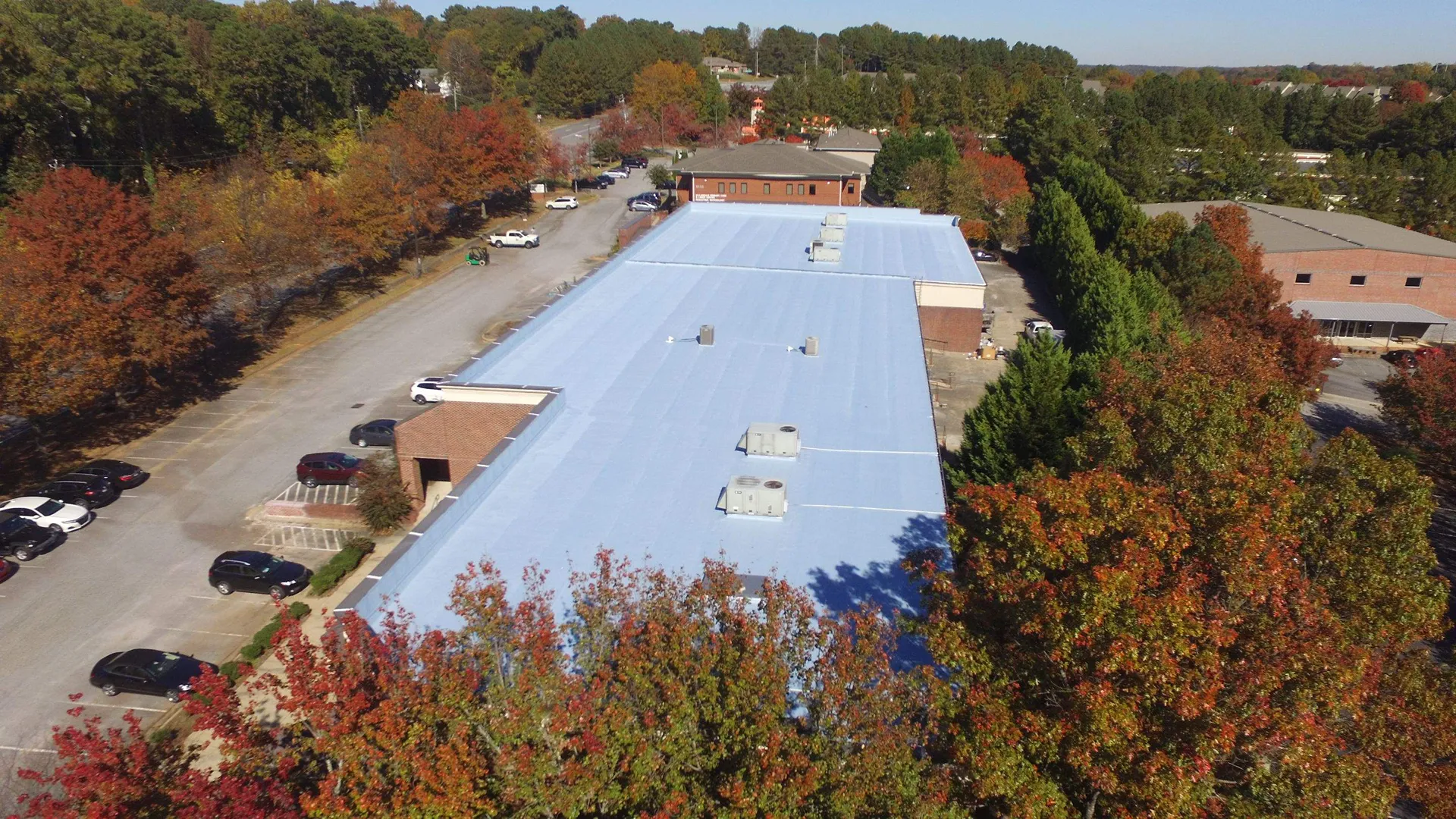
TPO vs. PVC Roofing: What’s the Difference?
TPO (thermoplastic polyolefin) is a single-ply roof membrane made from polypropylene and ethylene-propylene rubber with polyester reinforcement. TPO membranes offer excellent UV resistance and strong puncture resistance.
First introduced in the mid-1980s, TPO was commercially developed in the early 1990s. It has undergone multiple formulation changes since then to improve performance.
PVC (polyvinyl chloride) consists of two layers of vinyl with polyester reinforcement between them. It was first developed in Europe in the 1960s and later introduced to North America in the 1970s. Modern PVC-KEE formulations use enhanced plasticizers that don’t migrate or degrade. The chlorine content creates natural flame retardancy and chemical resistance.
To learn more, read PVC Roofing Systems: Everything Property Managers Need to Know.
Both are single-ply membranes with heat-welded seams, but different chemical makeup means different strengths and weaknesses. Understanding these differences helps you match the roofing material to your building’s exposure conditions and budget.
Performance Comparison: Where Each Material Excels
| Performance Factor | TPO | PVC |
|---|---|---|
| Chemical Resistance | Poor (degrades from oils/grease) | Excellent (highly resistant) |
| Fire Resistance | Meets standards (requires fire retardants) | Most fire-resistant single-ply |
| UV Resistance | Excellent (85-87% reflection) | Excellent (modern formulations) |
| Puncture Resistance | Better tear strength | Slightly less resistant |
| Flexibility | Stiffer, less workable | More flexible, easier flashing |
| Track Record | 30+ years, formulation changes | 45-50 years, proven stability |
Chemical Resistance
PVC is the clear winner for chemical resistance. It offers high resistance to oils, greases, animal fats, and most industrial chemicals. On the other hand, TPO degrades when exposed to petroleum products, cooking oils, and certain solvents.
Restaurants with rooftop exhaust systems almost always need PVC. Grease exposure can damage TPO roofs and even void the manufacturer’s warranty, which leads to premature failure. The same goes for industrial buildings with chemical fumes. PVC holds up, while other materials can break down over time.
On the other hand, most office buildings and warehouses never deal with grease or harsh chemicals, so this advantage usually isn’t a deciding factor for typical commercial properties.
TPO can be coated to improve chemical resistance, but that protection comes at an added cost. In one restaurant chain’s case, grease damage forced them to replace their TPO roofs after just eight years. When they switched to PVC, the upfront price was about 20% higher but the grease-related failures stopped entirely.
Fire Resistance
PVC’s chlorine content makes it naturally flame-retardant and the most fire-resistant single-ply roofing membrane on the market. TPO still meets required fire safety standards, but it relies on added fire retardants and can burn when exposed to open flame.
For buildings with strict fire codes, high-value contents, or insurance-driven fire rating requirements, PVC’s built-in fire resistance is a real advantage. While both systems can achieve the necessary fire ratings, PVC delivers that protection inherently; without relying on additional treatments.
UV and Weather Resistance
TPO is known for excellent UV resistance, reflecting roughly 85–87% of UV rays, which makes it a strong performer in hot, sunny climates. That high reflectivity can translate into real energy-efficiency gains.
For even more cooling savings in Georgia’s heat, consider pairing your membrane with reflective roof coatings to boost solar reflectivity and reduce rooftop heat gain.
PVC is also UV-resistant, and while older PVC membranes had issues with plasticizer migration in extreme heat, modern PVC-KEE formulations have largely eliminated that concern.
In desert or high-UV regions, TPO’s reflectivity can offer an edge in reducing cooling loads. Coastal environments tend to be a good fit for either system, though PVC’s flexibility helps it handle high winds more effectively.
TPO can experience some shrinkage or expansion under extreme heat, but those dimensional changes usually only become an issue in areas with dramatic temperature swings. Freeze-thaw cycles, rain, and snow don’t pose problems for either material when the roof is properly installed.
Puncture and Tear Resistance
TPO generally has superior tear strength and impact resistance. PVC is slightly less tear-resistant but more flexible, making repairs easier. Roofs with heavy HVAC equipment, high foot traffic from maintenance crews, buildings in hail-prone regions, or properties with rooftop access for tenants benefit most from TPO’s superior tear strength.
Membrane thickness (60 mil vs 80 mil) affects puncture resistance more than material type. Both materials handle everyday commercial roof use; the difference shows only in extreme conditions.
Durability and Expected Lifespan
Understanding how long your roof will actually last helps you calculate actual ownership costs and plan capital budgets accurately.
Service Life Expectations
TPO typically lasts 15-25 years in most climates, with premium systems reaching 30 years under ideal conditions and consistent maintenance. Manufacturer warranties range from 15 to 30 years, depending on membrane thickness and installation quality.
As a newer technology, TPO has less long-term field data than PVC, and some early formulations experienced premature failure, prompting industry-wide formulation changes.
PVC delivers a typical service life of 20-30 years across various applications, with premium systems regularly exceeding 35 years. Manufacturer warranties run 20-35+ years with proper installation, backed by 45-50 years of field performance data that supports these longevity claims.
Warranty length doesn’t equal guaranteed lifespan. A poorly installed 30-year roof can fail in 10 years, while a well-maintained 20-year roof can last 25 years or more. Installation quality and maintenance matter more than the warranty certificate.
What Actually Determines How Long Your Roof Lasts
Installation Quality
Poor quality Installation is the leading cause of premature failures. Heat-welded seams must be created at precise temperatures (typically 900-1100°F). Too much heat can damage the membrane, while too little creates weak seams that fail early.
Mechanical Fastenings
Mechanical fastenings must comply precisely with manufacturer specifications to prevent wind uplift and membrane stress. Flashing details around penetrations make or break long-term waterproofing performance.
Membrane Thickness
Membrane thickness directly impacts durability. A 60 mil membrane lasts significantly longer than a 45 mil membrane, and an 80 mil membrane outlasts both while handling heavy traffic better. Thicker membranes cost more upfront but deliver better ROI through extended service life. Consider your building’s roof traffic and equipment loads when selecting thickness.
Roof Maintenance
Maintenance extends lifespan by 30-50%. Minor repairs caught during biannual inspections prevent major failures that require complete replacement. Debris removal prevents ponding water that accelerates membrane degradation, and professional inspections identify issues before they become expensive problems.
Climate Exposure
Climate exposure affects how quickly your roof degrades. UV intensity, temperature swings, and precipitation patterns all accelerate wear. You can’t control the climate, but you can choose the right material for your region and maintain it properly.
Cost Breakdown: Upfront vs Long-Term Investment
Installation Cost Comparison
| Cost Factor | TPO | PVC |
|---|---|---|
| Price per sq ft (installed) | $4.50-$9.00 | $5.00-$12.00 |
| 20,000 sq ft building | $90,000-$180,000 | $100,000-$240,000 |
| Price difference | Baseline | 15-25% higher |
| 45 mil membrane | Lowest cost | Low cost |
| 60 mil membrane (most common) | Mid-range | Mid-range |
| 80 mil membrane | Premium | Premium |
Additional installation costs (both materials):
- Tear-off/disposal: +$1-$4 per sq ft
- Insulation (R-value requirements): +$0.50-$3 per sq ft
- Complex roof design: +10-20% labor
- Regional variation: Metro areas are 20-30% higher
PVC costs more upfront due to specialized plasticizers and superior chemical resistance. Budget for a minimum thickness of 60 mil for commercial durability.
30-Year Lifecycle Cost Analysis (20,000 sq ft building)
| Cost Analysis | TPO | PVC |
|---|---|---|
| Initial installation | $140,000 | $180,000 |
| Expected lifespan | 22 years | 32 years |
| Annual cost | $6,364/year | $5,625/year |
| Replacement at year 22? | Yes (+$140,000) | No |
| 30-year total | $280,000 | $180,000 |
| Lifecycle winner | ❌ | ✅ Saves $100,000 |
Energy & maintenance costs (both materials):
- Reflective membranes reduce cooling 10-20%: Save $3,000-$6,000/year ($90,000-$180,000 over 30 years)
- Annual maintenance: $2,000-$6,000/year (similar for both in standard applications)
Additional Budget Considerations
| Expense | Cost Range | When to Expect |
|---|---|---|
| Permits/inspections | $250-$500+ | Upfront |
| Mid-life repairs (TPO) | $5,000-$15,000 | Year 10-12 |
| Mid-life repairs (PVC) | $2,000-$8,000 | Year 15-20 |
| Next replacement (TPO) | $150,000-$200,000 | Year 20-25 |
| Next replacement (PVC) | $200,000-$280,000 | Year 30-35 |
Many contractors offer financing plans that spread costs over 5-10 years.
Making the Right Choice for Your Specific Building
When TPO Is Your Best Option
Choose TPO for:
- Budget-constrained projects where 15-25% savings matter more than maximum lifespan
- Simple roof designs: Warehouses, distribution centers, basic office buildings with minimal penetrations
- High-UV environments where maximum reflectivity provides an energy savings advantage
- Buildings you’ll own for 15-20 years, then sell (ROI timeline matches TPO lifespan)
- Facilities with heavy roof traffic where puncture resistance is paramount
- Low chemical exposure: No grease, no industrial fumes, standard commercial use
When PVC Is Worth the Premium
Choose PVC for:
- Restaurants and food service buildings: Grease/oil exposure destroys TPO, but PVC handles it
- Industrial facilities: Chemical exhaust, manufacturing processes with airborne contaminants
- Long-term ownership (20+ years): Lifecycle cost favors PVC despite higher upfront
- Buildings with strict fire requirements: Insurance rates, code requirements, high-value contents
- Complex roof designs: Multiple HVAC units, skylights, and unusual shapes benefit from PVC flexibility
- Maximum longevity priority: Install once and forget for 30+ years
Need Help Deciding Between TPO and PVC?
Duratec Roofing Solutions has been installing both TPO and PVC systems across Georgia since 2016. Our certified team assesses your building’s specific conditions—chemical exposure, roof complexity, and budget—to recommend the right material for your needs. We use premium products like Conklin and back every installation with top-tier warranties.
Get a free roof assessment: Call 706-819-2584 or request an estimate.
Installation Process: What to Expect
The installation process affects your commercial roofing system’s performance regardless of material choice. Both TPO and PVC follow similar steps with critical differences in execution.
Pre-installation preparation:
- Roof inspection and structural assessment
- Removal of the existing roof system if necessary
- Substrate repair and preparation
- Installation of insulation layers to meet energy efficiency requirements
Membrane installation:
- TPO roof membranes are rolled out and mechanically fastened or fully adhered
- PVC membrane installation follows similar attachment methods
- Seams are created using hot-air welding equipment
- Proper weld temperature is critical (typically 900-1100°F)—too hot damages the membrane, too cold creates weak seams
Critical installation factors:
- Flashing around roof penetrations (HVAC units, vents, skylights)
- Edge metal and perimeter details
- Drainage system integration
- Quality control testing of seam welds
Timeline: Most commercial installations are completed within 3-7 days for a 20,000 sq ft roof, weather permitting. Complex roofs with multiple penetrations take longer to install. Your roofing contractor should provide a detailed timeline during the bidding process.
The installation process is where material differences show up. PVC’s flexibility makes it easier to work in cold weather and around complex penetrations. TPO requires more precise temperature control during welding. Both need experienced installers; this isn’t a job for contractors who primarily work with other roofing materials.
Maintenance Requirements: Protecting Your Investment
Proper maintenance extends your commercial roof’s lifespan by 30-50% regardless of whether you choose TPO vs PVC. Both single-ply roof systems require similar maintenance schedules.
Biannual inspections (Spring and Fall):
- Check all seams and weld points for separation
- Inspect flashing around penetrations
- Examine the membrane for punctures, tears, or degradation
- Clear all drains and scuppers
- Remove debris, especially in valleys and low spots
- Document condition with photos
After severe weather:
- Inspect for wind damage or debris impact
- Check for standing water that indicates drainage issues
- Look for any membrane lifting or fastener failure
- Address damage immediately to prevent water infiltration
Annual professional maintenance:
- Deep cleaning to remove dirt and biological growth
- Resealing any minor repairs or patches
- Testing seam integrity with specialized equipment
- Updating maintenance log for warranty compliance
Cost considerations:
- DIY quarterly inspections: $0 (building staff)
- Professional biannual inspections: $500-$1,500 per visit
- Annual deep maintenance: $2,000-$4,000
- Emergency repairs: $500-$3,000 depending on damage
What kills roofs prematurely:
- Neglected ponding water (breaks down the membrane faster)
- Debris accumulation (traps moisture, damages the surface)
- Delayed repairs (small punctures become major leaks)
- Unauthorized roof access (foot traffic damages the membrane)
- HVAC contractors walking on the roof without protection
Set calendar reminders for inspections. Small investments in maintenance prevent catastrophic failures that cost tens of thousands to repair. Your warranty likely requires documented maintenance; skipping inspections can void coverage even if the roof fails due to manufacturing defects.
Frequently Asked Questions
Can TPO or PVC be installed over my existing roof?
Yes, both can be installed over existing roofs if the structure is sound and local codes permit. Your contractor must assess the roof’s integrity, use compatible underlayments, and verify the deck supports additional weight. Not suitable if the current roof has extensive damage or moisture issues.
Are TPO and PVC roofs recyclable?
Yes, both are recyclable. PVC has better-established programs. Some manufacturers offer take-back services to recycle old membranes into walkway pads and other products. TPO is also recyclable but has less developed infrastructure. Both reduce landfill waste compared to traditional roofing materials.
What voids a TPO or PVC roof warranty?
Common violations include: undocumented maintenance, unauthorized repairs, improper installation, unaddressed ponding water, and incompatible materials. Most warranties require biannual professional inspections with documented records. Skipping inspections can void coverage even if the roof fails due to manufacturing defects.
What’s the difference between manufacturer and contractor warranties?
Manufacturer warranties cover material defects (membrane degradation, delamination) for 15-30+ years. Contractor workmanship warranties cover installation errors (seam welding, flashing) for 1-10 years. You need both for complete protection. Always get both warranties in writing before work begins.
Do TPO and PVC roofs work with solar panels?
Yes, both are compatible with solar installations. Use ballasted racking systems or proper flashing around penetrations. Choose thicker membranes (60-80 mil) for better puncture resistance and inform your roofing contractor about future solar plans during installation to ensure proper preparation.
TPO vs PVC Roofing: Which One Wins?
There’s no universal “best” choice. The correct answer depends on your building’s use, budget, and ownership timeline.
Choose TPO when you:
- Have a tight budget
- Have a simple roof design
- Face low chemical exposure
- Plan a 15-20 year ownership
Choose PVC when you:
- Face grease or chemical exposure
- Plan long-term ownership
- Have a complex roof
- Prioritize fire resistance
The roof system you choose today protects your commercial building and business for the next 20-30 years. Invest the time to choose wisely based on your actual needs, not just the lowest bid.
Call us now
706-819-2584