
Duratec Roofing Solutions
How Much Does Commercial Roof Replacement Cost in Georgia?
- $Home
- $How Much Does Commercial Roof Replacement Cost in Georgia?
In Georgia, commercial roof replacement typically costs anywhere from $5 to $15 per square foot, depending on the roof type, building size, materials, and labor conditions. Keep reading to learn what drives these costs, how Georgia’s climate affects pricing, and smart ways to plan your replacement without costly surprises.
Key Takeaways
- Material choice drives your total cost. Commercial roofing materials range from $4-22 per square foot, with TPO and EPDM offering budget-friendly options while PVC and metal provide premium longevity.
- Hidden costs add up quickly. Tear-off, disposal, structural repairs, and permits can add $10,000-$30,000+ to your project if not included in initial quotes.
- Georgia’s climate affects material performance. Reflective roofing (TPO, PVC) reduces cooling costs in hot weather, while coastal areas need corrosion-resistant materials rated for higher wind speeds.
- Get multiple detailed estimates before deciding. Compare 3-5 quotes that itemize all costs, including warranties. The cheapest bid often excludes necessary work or uses inferior materials.
Schedule inspections before getting quotes. Professional inspections identify hidden damage early, preventing surprise costs during installation and ensuring accurate budget planning.
What Affects Your Commercial Roof
Replacement Cost
Several factors determine what you’ll pay for a new roof. Understanding these helps you evaluate quotes accurately and identify where contractors might be cutting corners or padding estimates.
Roof Size
Larger roofs have lower per-square-foot costs due to economies of scale; a contractor can work more efficiently on 20,000 square feet than on 5,000. However, your total cost still increases with roof size. Most commercial roofs range from 5,000 to 50,000+ square feet.
Material Choice
Your roofing material is the most significant cost driver, ranging from $4 to $ 22 per square foot, depending on your choice. This decision affects not just upfront cost but also longevity, energy costs, and maintenance needs over the roof’s lifetime. A cheaper material that needs replacement in 15 years costs more than a premium option lasting 50 years.
Roof Complexity
Multiple HVAC units, skylights, and vents significantly increase labor time, as workers must carefully work around each penetration. Multi-story buildings cost more than single-story structures due to the need for safety equipment and slower material transport. Unusual roof shapes or limited access add costs your contractor must account for.
Existing Roof Condition
Tearing off a single-layer old roof costs less than removing multiple layers. Expect $1-2 per square foot additional per layer beyond the first. Damaged roof decking requires structural repairs before installation, which you won’t know about until the tear-off begins. Water damage or rot can substantially increase your project scope and overall cost.
Commercial Roofing Material Costs in Georgia
Choosing the right roofing material means balancing upfront cost against long-term performance. Here’s what each option costs and when it makes sense for your building.
| Roofing System | Cost per Sq Ft | Best For | Key Benefit |
|---|---|---|---|
| EPDM Rubber | $4–$12 | Warehouses, budget projects | Most affordable, proven durability |
| TPO | $5–$12 | Offices, retail, schools | Energy-efficient, reflective |
| PVC | $8–$15 | Restaurants, manufacturing | Chemical resistant, strongest seams |
| Modified Bitumen | $9.50–$15.75 | High foot-traffic areas | Multi-layer durability |
| Built-Up Roofing | $12.50–$22.25 | Heavy-traffic roofs | Traditional, extremely durable |
| Metal | $12.50–$18.75 | Long-term ownership | 50+ year lifespan |
TPO Roofing (Thermoplastic Polyolefin)
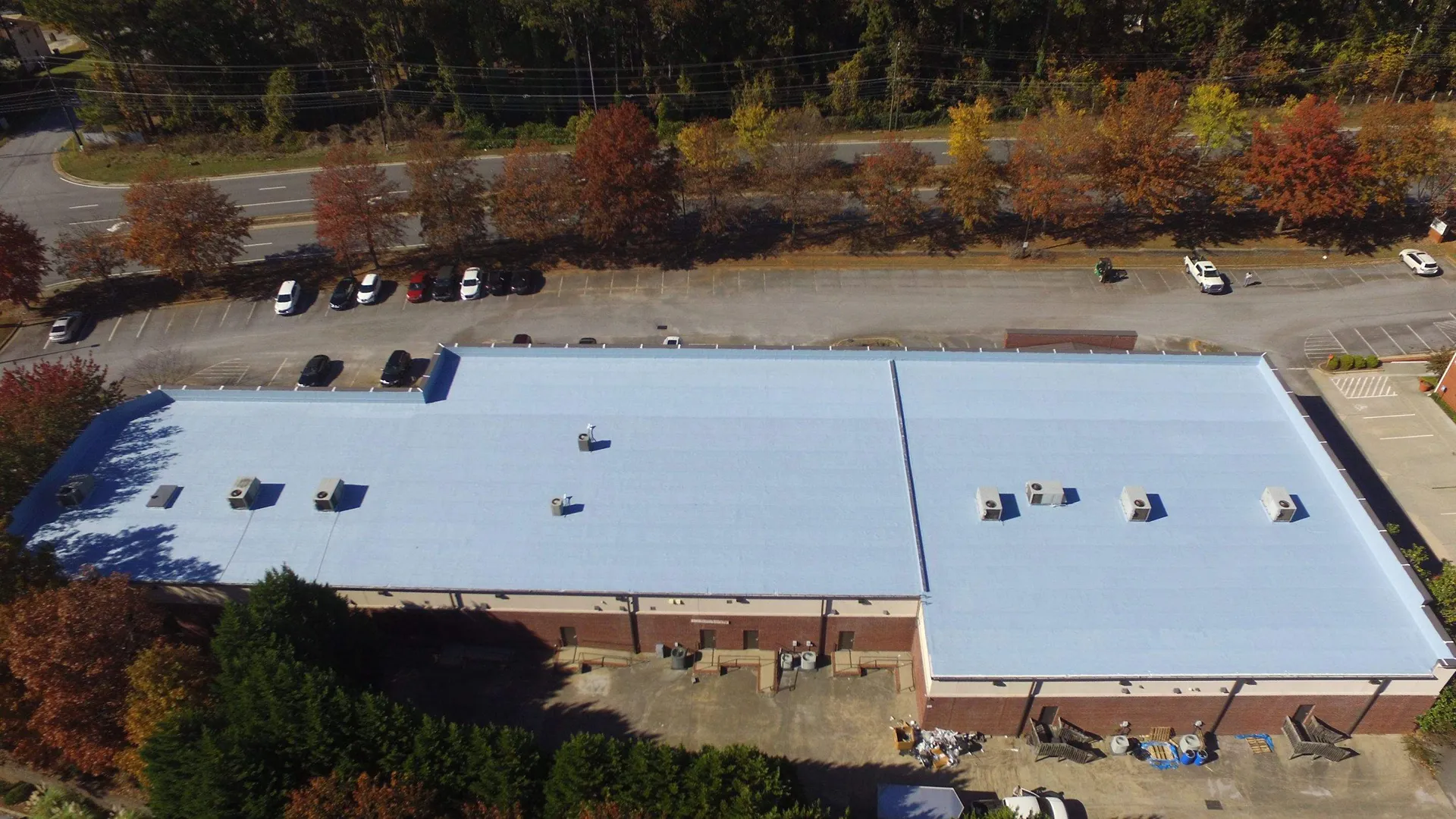
TPO costs $5-12 per square foot installed and works best for retail centers, offices, and schools where energy efficiency is a priority.
The white reflective surface reduces cooling costs in Georgia’s hot weather, potentially saving thousands of dollars annually. For building owners considering energy-efficient membrane systems, this guide to commercial TPO roofing in Georgia explains how TPO performs in the state’s climate and what to expect from installation and warranties. Heat-welded seams provide strong leak protection that outperforms glued seams in severe weather. Quality varies significantly between manufacturers; choose established brands like Conklin for industry-leading warranties and performance.
EPDM Rubber Roofing
EPDM costs $4-12 per square foot installed, making it the most budget-friendly option. It’s best for warehouses, storage facilities, and projects prioritizing low installation costs.
EPDM has a proven 50+ year life and reliably withstands Georgia’s weather extremes. The black color absorbs heat, increasing cooling costs compared to reflective options. Seams are glued rather than welded, creating potential weak points if not installed correctly.
PVC Roofing
PVC costs $8-15 per square foot installed and represents the premium commercial roofing option. If you’re deciding between membrane systems, this in-depth comparison of TPO vs PVC roofing breaks down differences in cost, durability, and long-term performance. It’s ideal for restaurants, manufacturing facilities, and areas with chemical exposure, such as grease or oil.
Heat-welded seams are stronger than the membrane itself, creating virtually leak-proof connections. PVC offers superior reflectivity, resulting in maximum energy efficiency. 30+ year warranties and minimal maintenance offset the higher upfront cost. Conklin’s PVC systems deliver exceptional performance with comprehensive warranty coverage.
Modified Bitumen
Modified bitumen costs $9.50-15.75 per square foot installed and excels on roofs with regular foot traffic.
The multi-layer system provides excellent durability when HVAC technicians need frequent rooftop access. More labor-intensive installation increases costs compared to TPO or EPDM. Repairs are more complex and require skilled contractors familiar with torch-down or cold-applied methods.
Built-Up Roofing (BUR)
Built-up roofing costs $12.50-22.25 per square foot installed and remains the gold standard for high-traffic roofs. Multiple layers of tar and roofing felt create a thick, durable surface that handles significant foot traffic.
Installation requires hot tar, making it more complex and time-consuming than modern alternatives. The heavy system requires structural verification; not all buildings can support BUR weight without reinforcement.
Metal Roofing
A metal roof costs $12.50-18.75 per square foot installed, with standing seam systems ranging $12-19 per square foot. It’s the best choice for long-term property ownership requiring minimal maintenance.
Metal roofs deliver lifespans of 30-50+ years with virtually no maintenance beyond occasional inspections. Georgia’s storms and high winds pose no threat to properly installed metal roofing. The higher replacement cost pays off with the lowest lifetime cost of any system.
If your existing metal roof is still structurally sound, this commercial metal roof restoration guide explains when restoration may be a more cost-effective alternative to full replacement.
Additional Costs to Budget For
These costs separate accurate quotes from low-ball estimates. Reputable roofing contractors include them upfront, while unreliable companies use them as surprise charges later.
Tear-Off and Disposal
Removing your existing roof costs $1-2 per square foot, plus $1 per square foot for each additional layer beyond the first. This includes dumpster rental and landfill fees that your roofing contractor must handle.
A roof-over (installing over existing material) saves money initially, but it isn’t always recommended; it can hide deck damage and shorten your new roof’s lifespan.
Structural Repairs
Damaged roof decking must be replaced before new roof installation can proceed safely. Water damage, rot, or structural issues discovered during the tear-off add unexpected costs to your roofing project. Damage extent varies widely, potentially adding $ 1,000 to $20,000+ to your total cost.
Reputable roofing contractors include contingency for unexpected repairs in their estimates. If a contractor’s quote seems too low, it’s because they haven’t budgeted for the structural issues most commercial buildings face after 20+ years.
Insulation Upgrades
Adding or upgrading insulation costs $1-4 per square foot but significantly reduces cooling costs in Georgia’s hot climate. Building codes may require this for full replacements in many Georgia counties. Energy savings often offset the installation cost within 3-5 years, making this a wise investment rather than an expense. For buildings where insulation is a major cost concern, spray foam roofing for Georgia commercial buildings is also worth comparing because it adds continuous insulation while creating a seamless roof surface.
Compliance and Protection Costs
Permits and inspections are required in most Georgia counties, costing $200-$1,500 depending on location and project size. Professional contractors handle permits and final inspections to ensure work meets building codes. This protects you from liability if problems arise. Low-ball quotes often exclude permit costs, leading to surprise charges later.
Warranties matter significantly. Manufacturer material warranties typically last 10-30 years, while contractor workmanship warranties range from 1-10 years. Extended warranties cost more upfront but protect your investment if problems emerge. The cheapest quotes often include minimal or no warranty coverage, leaving you exposed to roof repair costs if issues develop.
Ways to Manage Replacement Costs
Commercial roof replacement represents a significant investment, but several strategies help manage the expense without sacrificing quality.
Timing Your Project
Schedule during the off-season (late fall through winter in Georgia), when contractors are more available and may offer better rates. Avoid the summer peak season when demand and prices are highest due to storm damage, which creates emergency work. Plan during your low-revenue periods to minimize business disruption.
Emergency replacements always cost more; plan when possible by getting inspections every 3-5 years. This lets you budget and schedule replacement on your terms rather than during a leak crisis.
Financing Options
Many commercial roofing contractors offer financing programs that spread costs over time. Business credit lines or equipment loans can fund your roofing project without depleting cash reserves. SBA loans may be available for qualifying businesses.
Compare interest rates and terms carefully across lenders. Factor in financing costs when evaluating the actual cost of different roofing materials and systems.
Tax Deductions for Energy-Efficient Roofing
Section 179D allows building owners to deduct up to $1.80 per square foot for energy-efficient commercial building improvements. This applies to new roofs that reduce building energy consumption through better insulation or reflective materials. However, it requires energy modeling by qualified professionals to verify eligibility.
The deduction belongs to the building owner, not the contractor. Consult your tax advisor to determine if your roofing project qualifies. Ask roofing contractors if they work with energy modelers for 179D certification; this can save you thousands in taxes.
What NOT to Cut
- Don’t skip proper tear-off to save money (hides problems, shortens roof life)
- Don’t choose the lowest-quality materials to hit a budget (costs more in repairs)
- Don’t eliminate insulation upgrades (energy costs will offset savings)
- Don’t skip permits (creates liability and code violations)
Georgia-Specific Cost Factors
Georgia’s climate and regulations create unique considerations that affect your roof replacement cost and material choices.
Climate Impact on Material Choice
Georgia’s hot, humid climate makes reflective roofing (TPO, PVC, white EPDM) more cost-effective by reducing cooling costs. Intense UV exposure degrades lower-quality materials faster, meaning cheap options need replacement sooner.
Coastal areas are prone to salt-air corrosion, and PVC and specific metal coatings perform better than standard materials in these conditions.
Coastal areas require higher wind-rated systems (150+ mph vs. 90-120 mph inland) based on Georgia building code wind zones. This affects both material choice and installation cost, as higher wind ratings require more fasteners and reinforcement.
Regional Labor and Permit Costs
Metro Atlanta labor costs are higher than those in rural Georgia due to demand and cost-of-living differences. Permit costs vary significantly by county, ranging from $200-$1,500 depending on local requirements. Fulton, DeKalb, and Gwinnett counties have stricter permitting requirements that can extend your timeline.
Material availability remains generally consistent across Georgia, so the type of roof you choose won’t be affected by supply issues in most locations.
Frequently Asked Questions
How long does a commercial roof replacement typically take to complete?
Most commercial roof replacements take one to three weeks depending on building size and complexity. Weather conditions, material availability, and unexpected structural repairs can extend the timeline. Most businesses remain operational during installation.
Do I need to close my business during the roof replacement?
Most businesses stay open during roof replacement. Professional contractors work around your schedule, often during off-peak hours or weekends. Noise and limited roof access are the main disruptions, not full closures.
What warranty coverage should I expect with a new commercial roof?
Manufacturer material warranties typically cover 10-30 years, while contractor workmanship warranties range from 1-10 years. Premium NDL (No Dollar Limit) warranties cover full repair costs without proration but cost more upfront.
How long should a commercial roof last before needing replacement?
TPO roofs last 15-25 years, EPDM roofs last 15-35 years, modified bitumen 15-25 years, and metal roofs 30-50+ years. Actual lifespan depends on installation quality, maintenance frequency, and Georgia’s weather exposure including UV radiation and storms.
Can I install a new roof over my existing commercial roof?
While possible, roof-overs aren’t recommended. They hide structural damage, add weight to your building, void most manufacturer warranties, and shorten your new roof’s lifespan. Full tear-off allows proper inspection and ensures longevity.
What Next?
Once you understand the potential cost of a commercial roof replacement in Georgia, the next step is turning that knowledge into a smart plan of action.
Start with a professional roof inspection to confirm whether replacement is truly necessary and to identify the most cost-effective system for your building and climate.
From there, gather multiple quotes from experienced local contractors, review material warranties carefully, and align the project with your budget and timeline; ideally before minor issues escalate into emergency repairs.
Call us now
706-819-2584